Extending a limn as an act of (re)connection, (re)engagement & (re)introduction
The above video features a music track titled, Phantom Limb Pt. 2 from the 2002 motion picture, Luckiest Girl Alive. Music composed by Linda Perry, screenplay by Jessica Knoll, directed by Mike Barker. The music track plays as a previous black and white version of the logo is displayed with accompanying text explaining that the blog is being re-titled from: Feminist Limns: An Embodied Archive of Intersectional forms of Access to: Feminist Limns: A Disabled Archive of Intersectional Struggles for Access. The new title is accompanied with a coloured version of the original logo reflecting the changes in titling; and promises forthcoming blog posts focused on centering disability as a concept, as well as an emotional and embodied reality that will explore lived affects of ableism. The instrumental track playing concurrently with text features a melancholic, yet hopeful tune meant to echo the combined and equal pull of joy and struggle of navigating an able-bodied world with a disabled body.
Following an extended absence (I have not published a blog post since October 2021), I have decided to punctuate my return to the blog-sphere with a re-titling of my blog to: Feminist Limns: A Disabled Archive of Intersectional Struggles of Access. This is a deliberate choice, as the text in the video explains:
FEMINIST LIMNS…
Will remain anchored in feminist thought. The change in title signals a foregrounding of disability as a concept and as an emotional and embodied reality. My goal is to explore the lived and felt affects of disability and ableism. Forthcoming blog posts will explore the emotional labour–struggle, shame, melancholy; as well as joy, pride and awe of being disabled.
Ev Baczewska
While I have never been disingenuous or inauthentic in the limning of my experience as a disabled woman, my voice did not reflect an emotional granularity necessary to truly depict the seemingly often oppositional sensory experience of: struggle and joy, awe and shame, pride and disability; and human and (anti-)heroine. Forthcoming entries will reflect an activism that is messy, truths that are uncomfortable, realities that are jarring, and emotional journeys that intersect and intertwine, and refuse to accept ableist tendencies.
LIMN (verb) 1. Paint or draw (a picture) or portrait; portray a subject. 2. Portray or represent (esp. a person) in words: the portrait limned the poem. 3. To suffuse or highlight (something) with a bright colour or light: A crescent moon limned the night sky.
LIMB (noun) 1. A projecting part of a person’s or animal’s body such as an arm, leg, or wing. 2. A projecting part of a thing, e.g. the branch of a tree.
Student’s Oxford Canadian Dictionary, 2nd Edition (2007)
Blog art.
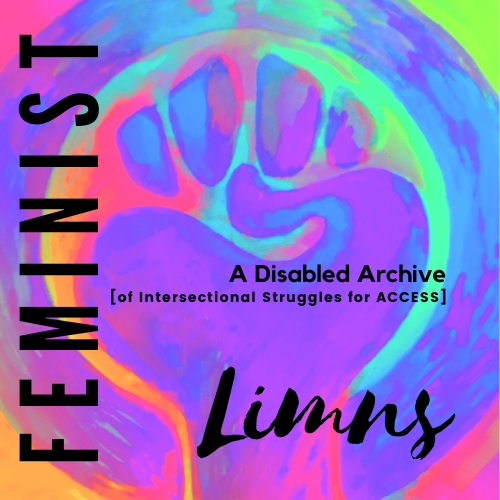
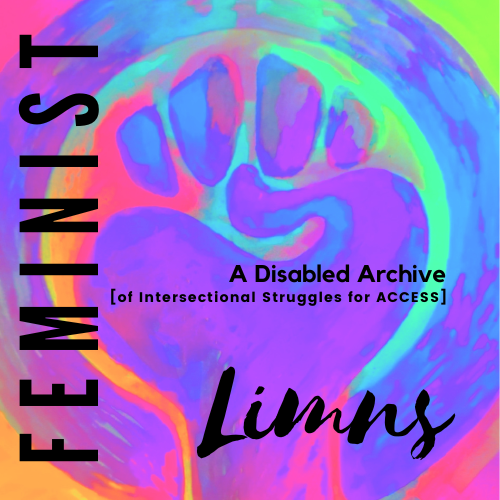
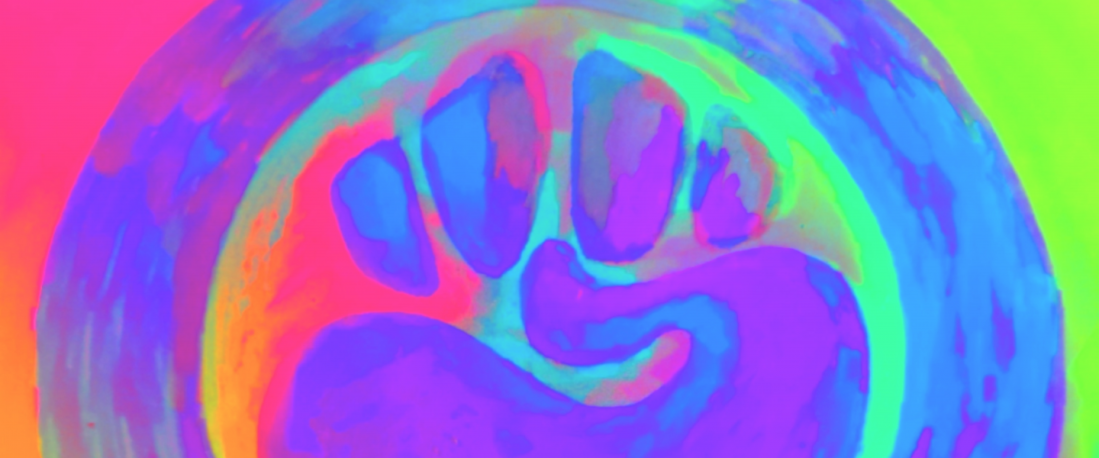
A suffused, water-coloured clenched raised fist as an international sign of protest. A refusal to lend our limb(s) to the (re)creation of ableism and patriarchy (Ahmed, 2017). The ‘liquified’ characteristic of the image symbolizes the intersectionality of barriers, forms, and struggles for access. The fist is framed by the female gender symbol cut off at the wrist. Ascending from the bottom left corner to the top left corner is the word: ‘FEMINIST’ in uppercase, solid black font. Flushed right in the centre of the image is the phrase ‘A Disabled Archive’ in smaller uppercase and lowercase, solid black font. Slightly flushed left underneath, in squared brackets is the phrase ‘of Intersectional Struggles for Access.’ The word ‘ACCESS’ appears in uppercase font. The word ‘Limns’ is slightly flushed to the right at the bottom of the image in black, loose cursive-style font.
Feminist limns as undoing ableism.
As a person with a physical disability, my experience is limned by the necessity (and the struggle) of using a motorized wheelchair or rollator walker in a world that privileges walking as the optimal form of everyday life navigation. Dominant social, cultural, and structural assumptions of somatic norms do not align with my bodily disposition and comportment. These cascading assumptions result in my being continually confronted by the spectre of ableism – the value of my experience being measured against able-bodied people with ease of access. In a world where the pinnacle of self mastery is independene, my struggle to will my body to comply to the social aesthetics of desired bodily norms have led me to feminism: how we thrive in a world that we are confronted and restricted by, and denied access to (Ahmed, 2017). Following Ahmed’s conceptualization of feminism, developing feminist tendencies begins with recognizing the emotional and physical labour required when we experience social markers of difference – i.e. race, class, gender, disability – “as a restriction of possibility” (p. 7). Feminism begins with bodies (limbs) “not at ease in a world” (p. 7) and provides new ways illuminating (limning) what we must come up against as a form of survival.
An archive of (limned) limbs.
When we gather an archive assembled by limning the experience of our limbs, we not only include documents and texts, but the voices that provide first-hand accounts: the stories of our bodies and limbs in the world. Consider this blog as: my first-hand account limned by my experience as a disabled person with willful and unapologetic limbs in a largely inaccessible world. This blog is a deliberate curration of stories, experiences, texts, and images. A digital archive as the assemblage of memories, thoughts, and reflections that would have otherwise remained scattered, personal, and disorganized becoming legible, intelligible, public, and shared. By limning my lived experience as a disabled woman (my limbs) become part of a community of many that illuminate a cascade of barriers, blockages of access, and ableist tendencies. May my limns (and limbs) as a projecting part of a thing, move us and connect us to rearticulate disability as capacity, as value, as community with a shared refusal to limit the amount of space (Ahmed, 2017) and time we take up conditioned by the multitude of barriers we come up against.
Until next time.
With vulnerability & shared refusal,
Ev XO
Reference:
Ahmed, S. (2017). Living a feminist life. Duke University Press: Durham.
Disability Rights Activist, Feminist Sociologist & Self-described ‘space invader’
As a space invader, I relish in exposing the socio-spatial and political boundaries that govern bodies occupying spaces that don’t meet somatic norms. With wheelchairs, walkers, we invade space unveiling its limits. Invading space is a useful tactic that disrupts dominant assumptions of access and entry.
Ev Baczewska
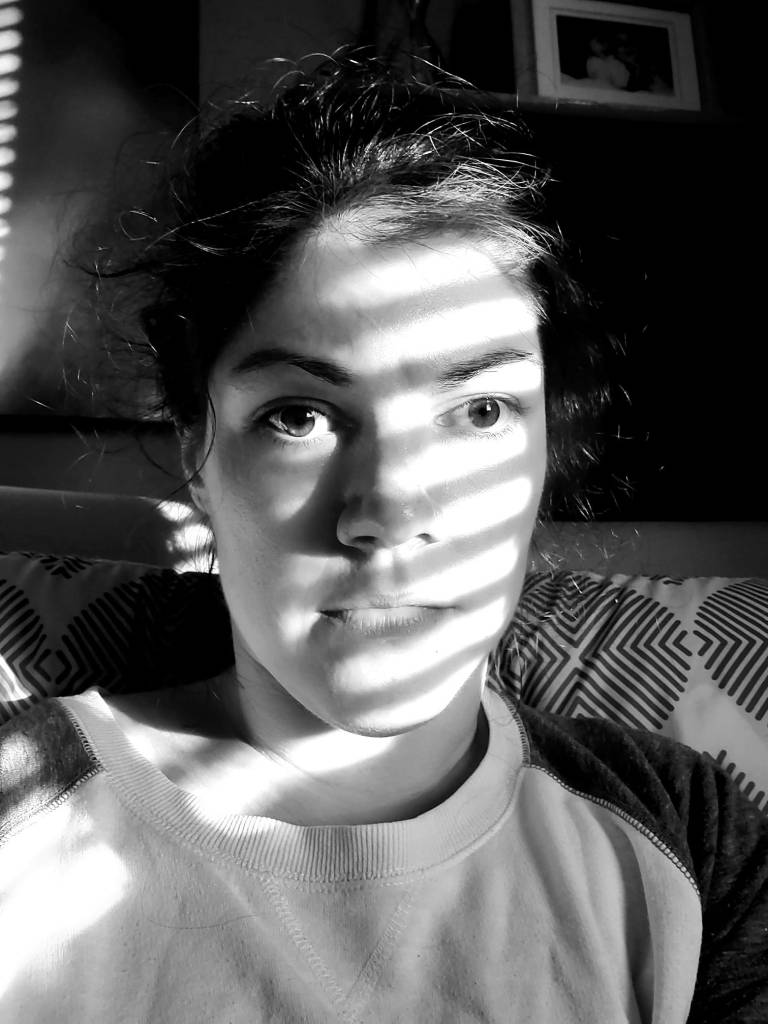
Self-taken headshot. I am looking straight into the frame. The image is in grayscale to accentuate the rays of light that limn the right side of my face. The light pierces through a window with blinds drawn closed. The window is out of frame.
As a woman with a physical disability, my work is focused on foregrounding the voices and lived experiences of people living with disabilities as a way of illuminating and eliminating barriers. Being a feminist sociologist, my work analyzes the ways in which social markers of differencerace–race, class, gender, (dis)ability, etc., inform people’s unique standpoints, and how such identity categories coalesce producing distinct experiences of oppression and privilege.
In a world that largely privileges the voices, movements, places, spaces, paths, and representations already forged by those who meet gender and other embodied norms, my advocacy is informed by those that do not ascribe to normative ways of being–heteronormative, ableist, and patriarchal tendencies.
Not shying away from exposing institutional barriers and limits, my experience demonstrates the continued necessity of making everyday life accessible. I rely on my lived accounts of navigating space (i.e., the workforce, places of higher education, and other social institutions) to speak truth to power by concretely illustrating that my presence in such spaces continues to be contested.
Feminist Limns: An Embodied Archive of Intersectional Forms of Access is a digital collection of my lived experience. An archive of a space invader: not expected but showing up anyway. My entry, like an invasion is never discreet – it is visual and auditory: a spectacle animated by the sounds of the whirling and twirling of wheels, the shuffling of chairs, the sometimes climbing of stairs and avoidance of stares, the switching of seats, the rearrangement of desks, and the struggle of opening doors. An archive of refusal and acceptance, and an archive of refusal of acceptance.
 Feminist Limns