LIMN (verb) 1. Paint or draw (a picture) or portrait; portray a subject. 2. Portray or represent (esp. a person) in words: the portrait limned the poem. 3. To suffuse or highlight (something) with a bright colour or light: A crescent moon limned the night sky.
LIMB (noun) 1. A projecting part of a person’s or animal’s body such as an arm, leg, or wing. 2. A projecting part of a thing, e.g. the branch of a tree.
Student’s Oxford Canadian Dictionary, 2nd Edition (2007)
Blog art.
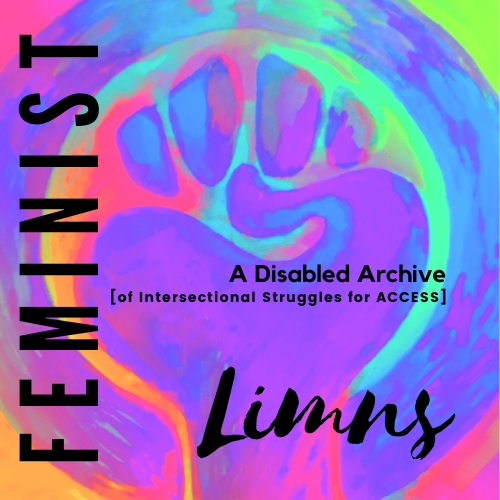
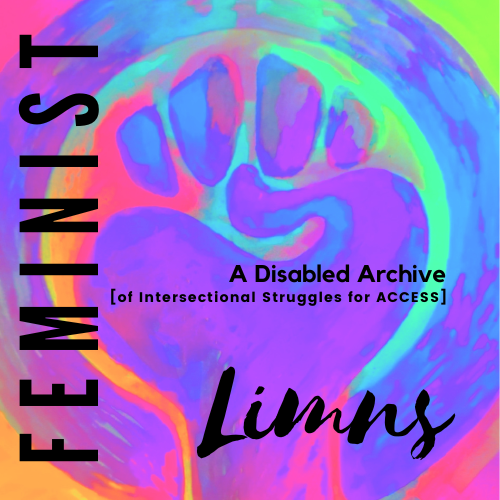
A suffused, water-coloured clenched raised fist as an international sign of protest. A refusal to lend our limb(s) to the (re)creation of ableism and patriarchy (Ahmed, 2017). The ‘liquified’ characteristic of the image symbolizes the intersectionality of barriers, forms, and struggles for access. The fist is framed by the female gender symbol cut off at the wrist. Ascending from the bottom left corner to the top left corner is the word: ‘FEMINIST’ in uppercase, solid black font. Flushed right in the centre of the image is the phrase ‘A Disabled Archive’ in smaller uppercase and lowercase, solid black font. Slightly flushed left underneath, in squared brackets is the phrase ‘of Intersectional Struggles for Access.’ The word ‘ACCESS’ appears in uppercase font. The word ‘Limns’ is slightly flushed to the right at the bottom of the image in black, loose cursive-style font.
Feminist limns as undoing ableism.
As a person with a physical disability, my experience is limned by the necessity (and the struggle) of using a motorized wheelchair or rollator walker in a world that privileges walking as the optimal form of everyday life navigation. Dominant social, cultural, and structural assumptions of somatic norms do not align with my bodily disposition and comportment. These cascading assumptions result in my being continually confronted by the spectre of ableism – the value of my experience being measured against able-bodied people with ease of access. In a world where the pinnacle of self mastery is independene, my struggle to will my body to comply to the social aesthetics of desired bodily norms have led me to feminism: how we thrive in a world that we are confronted and restricted by, and denied access to (Ahmed, 2017). Following Ahmed’s conceptualization of feminism, developing feminist tendencies begins with recognizing the emotional and physical labour required when we experience social markers of difference – i.e. race, class, gender, disability – “as a restriction of possibility” (p. 7). Feminism begins with bodies (limbs) “not at ease in a world” (p. 7) and provides new ways illuminating (limning) what we must come up against as a form of survival.
An archive of (limned) limbs.
When we gather an archive assembled by limning the experience of our limbs, we not only include documents and texts, but the voices that provide first-hand accounts: the stories of our bodies and limbs in the world. Consider this blog as: my first-hand account limned by my experience as a disabled person with willful and unapologetic limbs in a largely inaccessible world. This blog is a deliberate curration of stories, experiences, texts, and images. A digital archive as the assemblage of memories, thoughts, and reflections that would have otherwise remained scattered, personal, and disorganized becoming legible, intelligible, public, and shared. By limning my lived experience as a disabled woman (my limbs) become part of a community of many that illuminate a cascade of barriers, blockages of access, and ableist tendencies. May my limns (and limbs) as a projecting part of a thing, move us and connect us to rearticulate disability as capacity, as value, as community with a shared refusal to limit the amount of space (Ahmed, 2017) and time we take up conditioned by the multitude of barriers we come up against.
Until next time.
With vulnerability & shared refusal,
Ev XO
Reference:
Ahmed, S. (2017). Living a feminist life. Duke University Press: Durham.
Disability Rights Activist, Feminist Sociologist & Self-described ‘space invader’
As a space invader, I relish in exposing the socio-spatial and political boundaries that govern bodies occupying spaces that don’t meet somatic norms. With wheelchairs, walkers, we invade space unveiling its limits. Invading space is a useful tactic that disrupts dominant assumptions of access and entry.
Ev Baczewska
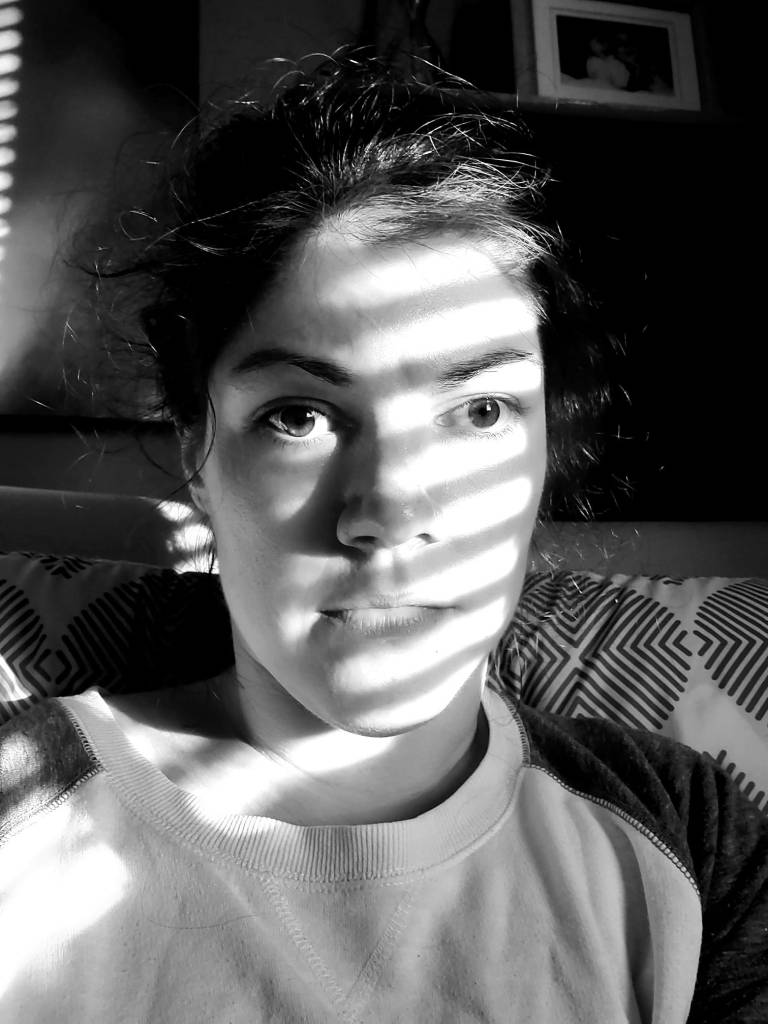
Self-taken headshot. I am looking straight into the frame. The image is in grayscale to accentuate the rays of light that limn the right side of my face. The light pierces through a window with blinds drawn closed. The window is out of frame.
As a woman with a physical disability, my work is focused on foregrounding the voices and lived experiences of people living with disabilities as a way of illuminating and eliminating barriers. Being a feminist sociologist, my work analyzes the ways in which social markers of differencerace–race, class, gender, (dis)ability, etc., inform people’s unique standpoints, and how such identity categories coalesce producing distinct experiences of oppression and privilege.
In a world that largely privileges the voices, movements, places, spaces, paths, and representations already forged by those who meet gender and other embodied norms, my advocacy is informed by those that do not ascribe to normative ways of being–heteronormative, ableist, and patriarchal tendencies.
Not shying away from exposing institutional barriers and limits, my experience demonstrates the continued necessity of making everyday life accessible. I rely on my lived accounts of navigating space (i.e., the workforce, places of higher education, and other social institutions) to speak truth to power by concretely illustrating that my presence in such spaces continues to be contested.
Feminist Limns: An Embodied Archive of Intersectional Forms of Access is a digital collection of my lived experience. An archive of a space invader: not expected but showing up anyway. My entry, like an invasion is never discreet – it is visual and auditory: a spectacle animated by the sounds of the whirling and twirling of wheels, the shuffling of chairs, the sometimes climbing of stairs and avoidance of stares, the switching of seats, the rearrangement of desks, and the struggle of opening doors. An archive of refusal and acceptance, and an archive of refusal of acceptance.
Disability pride and grief oscillate according to the rhythms of access, punctuated by the certainty and predicability of ableism.
– Ev Baczewska
July marks Disability Pride month. In truth, I consider myself a relatively new member of the Disability Pride movement. My activism thoroughly foregrounded in unifying pride with disability, though it took me well into my late 20s to actively claim a disabled identity that is not founded in abject shame. Disability Pride being synonymous with Disability Justice, I deliberately employ pride in calls for disability justice. Meant to convey a sense, a feeling of the enfleshed–lived and felt affects of disability and ableism, calls for Disability Pride elucidate the paradox of living with a disability: I sense myself at once enmeshed in chronic feelings of guilt, shame, exclusion, and pain with intermittent joy, comfort, and pride while in (or out of) community with others. Not until I welcomed a sense of pride among my experience of disability was I able to openly acknowledge the haunting reverberations of grief that often consume my everyday negotiation of a world not intended or built for me in mind. To be disabled is consistently clash with a sense of loss. I have felt immeasurable loss. Loss of: love, belonging, connection, intimacy, spontaneity, opportunity; entry into bars, parties, dance floors, buildings, offices, homes, boardrooms, bedrooms, bathrooms, medical exam tables, etc. My own journey still fraught with ableist tendencies (YES–disabled people need to confront their own ableist biases). I have a lot of grief and shame left to unpack, but disability pride offers me avenues for disabled joy. Most importantly, it arms me with the tools to undue ableism.
Cultivating disability pride.
My advocacy leads with the following conditions for cultivating genuine disability pride:
Disability Pride demands that we name the lived and felt affects of ableism
Recognize that ableism is inextricably linked to all systems of oppression and violence towards those that are unable to reproduce norms that align with a dominant culture, race, sexuality, gender identity, language, religion, appearance, age, health/wellness, general ways of being, learning, and navigating, etc.
Identify as disabled. This is necessary to pressure social orders to produce an environment in which disabled people thrive. Identifying as disabled creates community, gives access to disability things, and resources
Foreground the lived experience of people with disabilities that are ignored by official policy – i.e., the Accessibility for Ontarians with Disabilities Act
Recognize that people with disabilities live complex lives with intersecting identities and barriers. We hold multiple identities and markers of difference
Implementing universal access: Building front door accessibility, not backdoor routes. Considering different ways of being from the onset
Using less energy to impression manage (making others feel more comfortable in our presence)
Fostering Disability Pride means undoing ableism. This is collective world building: we all hold the responsibility of creating a world founded on belonging
Undoing ableism requires narratives of disability that reflect the oppositional sensory experience of: struggle and joy; awe and discomfort; pride and shame of being disabled
Building disability pride demands activism that is messy, truths that are uncomfortable, realities that are jarring; barriers that intersect and intertwine, and refuse to accept ableist tendencies
Books as companions: Readership as community & companionship.
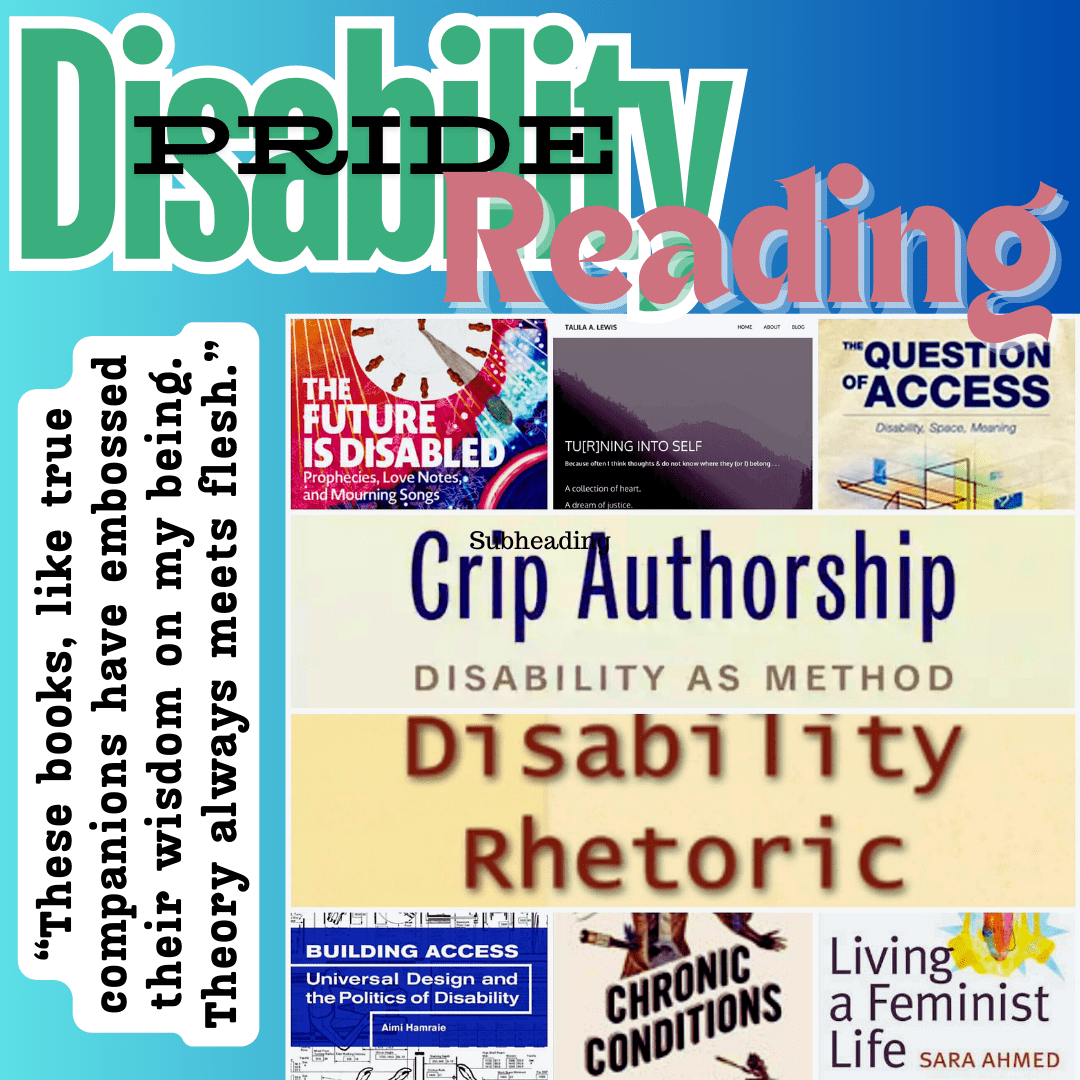
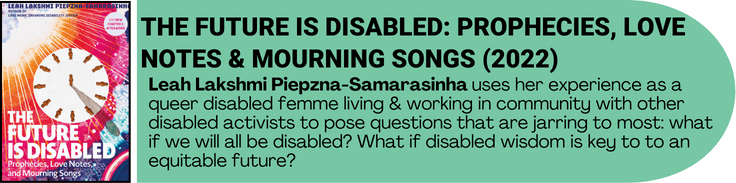
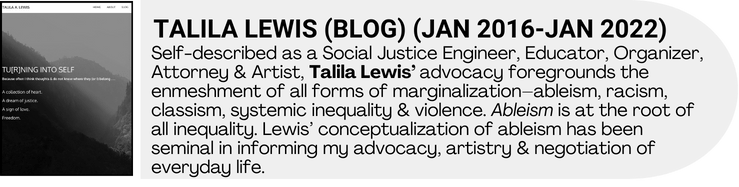
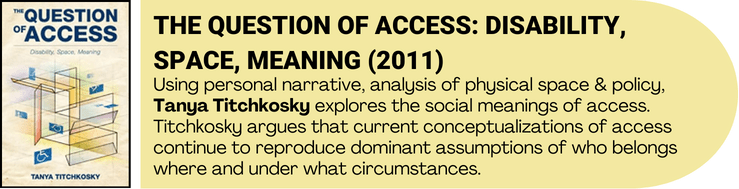
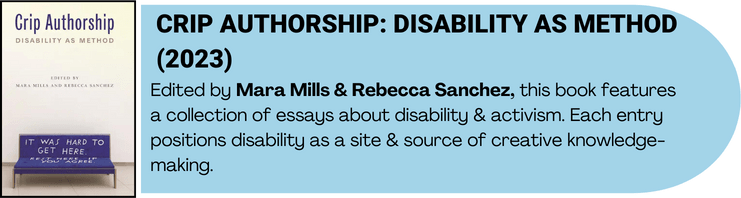
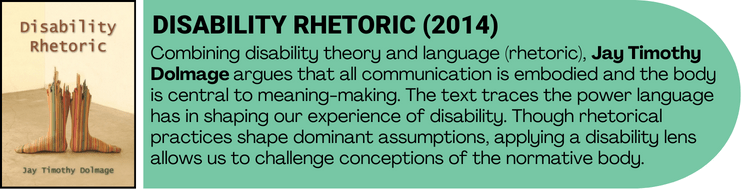
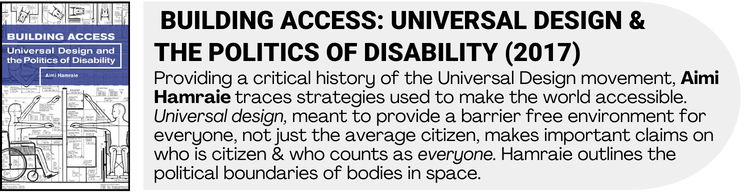
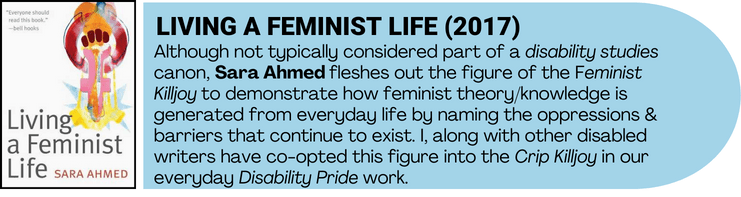
To cultivate disability pride is to find community and companionship. Stories of disability, each unique and nuanced, echo a singular plurality–a connecting and affirming limn highlighting the inextricable intersections of oppression, creative resilience, and pride. It is a call to solidarity. Recognizing that ableism breeds all forms of oppression and inequality has widened my call for justice. Adopting an anti-ableist approach has led me to those seeking to transform everyday institutions by exposing the central interlinkage between ableism, racism, sexism, classism, and all other discriminatory “isms” perpetuating exclusion, hostility, or violence. This community has revealed itself to me in several iterations: institutional diversity consultants, writers; and other disabled activists, authors, and colleagues. Colleagues have become allies. Authors’ theories and narratives have illuminated experiences of disabled or activist grief and joy igniting my own contribution to making life more equitable by making it accessible. Notably, it has brought me in touch with books (and other forms of texts). Sprayed with coffee stains because I was startled out of my train of thought in the midst of reading or pages marked by tears because someone else’s narrative captured an essence of my lived experience, passages have been highlighted, notes have been scribbled, and corners have been earmarked for future citation; these books have lended the ideas and words to contextualize my own thoughts. Like true companions, these books have embossed their wisdom on my being. Theory always meets flesh. They have revealed a lexicon to decode how oppression functions and feels. They have all contributed tools to dismantle systems of ableism and expanded my understandings of disability beyond medical explanations providing the literary, theoretical, rhetorical, and artistic methods to flesh out my own disabled grief and joy. I extend a connective limn to anyone who wishes to join in allyship of disabled pride. Listed below are some of the books that reframed my thinking and feeling of disability. This list is not exhaustive. There are many, many authors and activists from various fields, disciplines, and other forms of credentialed knowledge whom have influenced my own authorship. This is a starting point for those that are new to these ideas and concepts…and hopefully a point of expansion for those living disabled lives.
For more information, click on graphics below to be taken to the book’s publisher site.
In solidarity, I warmly invite suggestions for further reading…
She smiles not because she is happy, but because she’s been promised happiness.1
Ev Baczewska
Physiotherapy as a type of ‘cruel optimism,’ “…promises to induce in you an improved way of being” (Berlant, 2011, p. 1). When the spectre of ableism lingers, the cruel optimism of physiotherapy as the gateway to improved bodily function, or in its most radical form – the mere possibility of being in close proximity to able-bodiedness – leads to a preoccupation with unachievable somatic norms. The cruelness rests in the unattainable fantasies this optimism conjures. This entry will chart the traumas of ableist tendencies reflecting on the failure of the promises of happiness, and recount the “depression, dissociation, pragmatism, cynicism, optimism, activism, [and] an incoherent mash” (Berlant, 2011, p. 2) associated with the conscious unravelling of this cruel optimism.
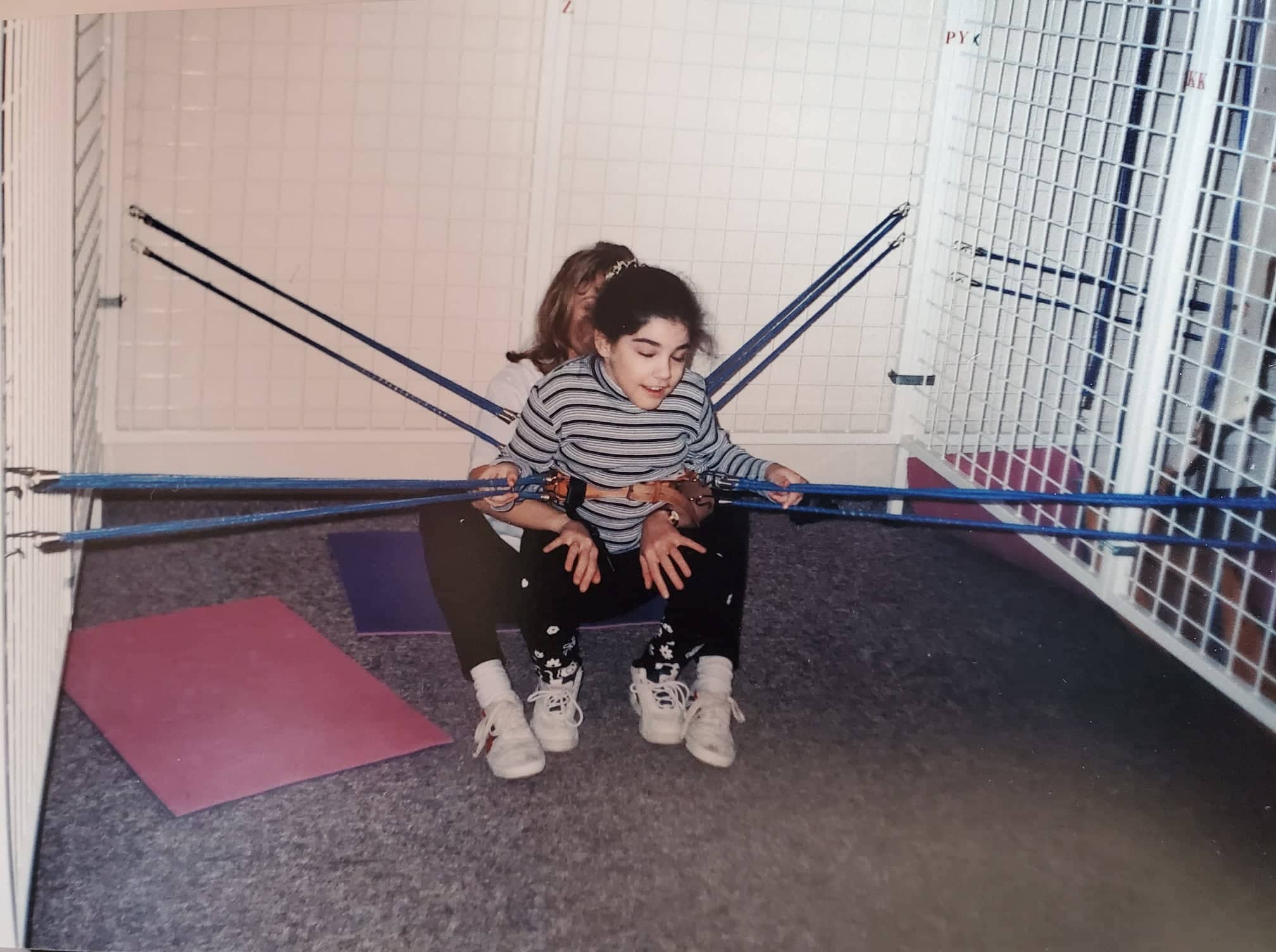
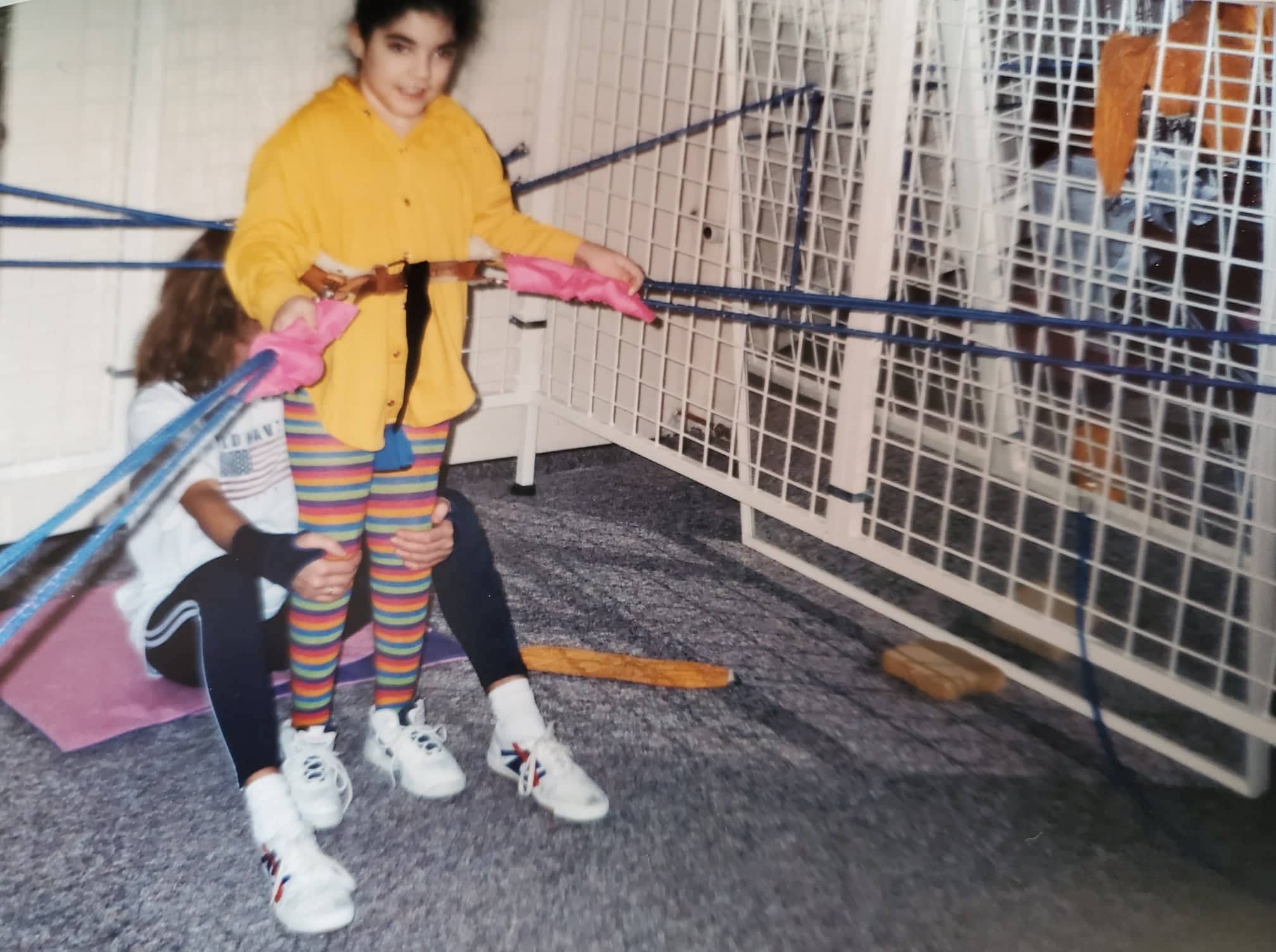
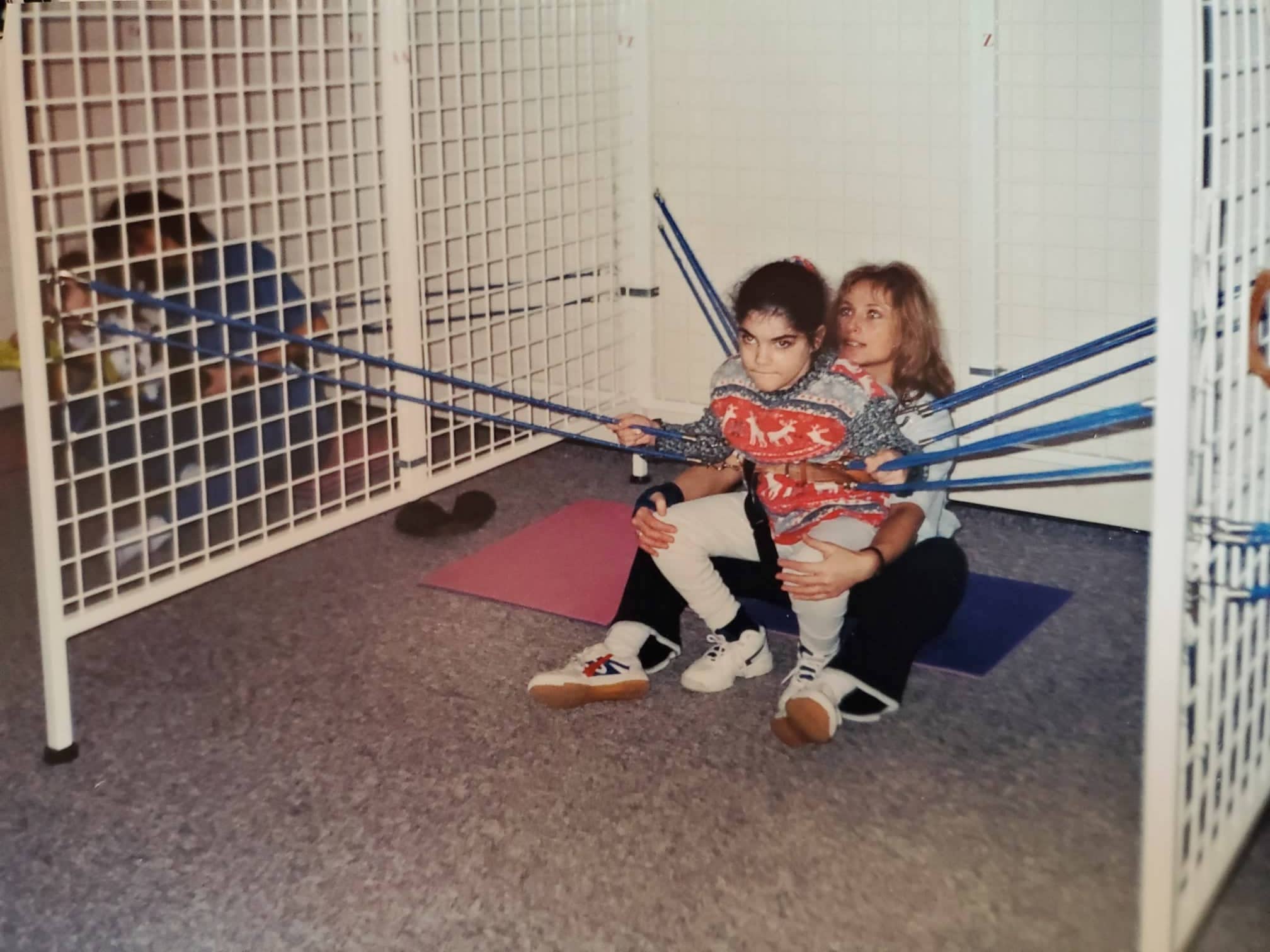
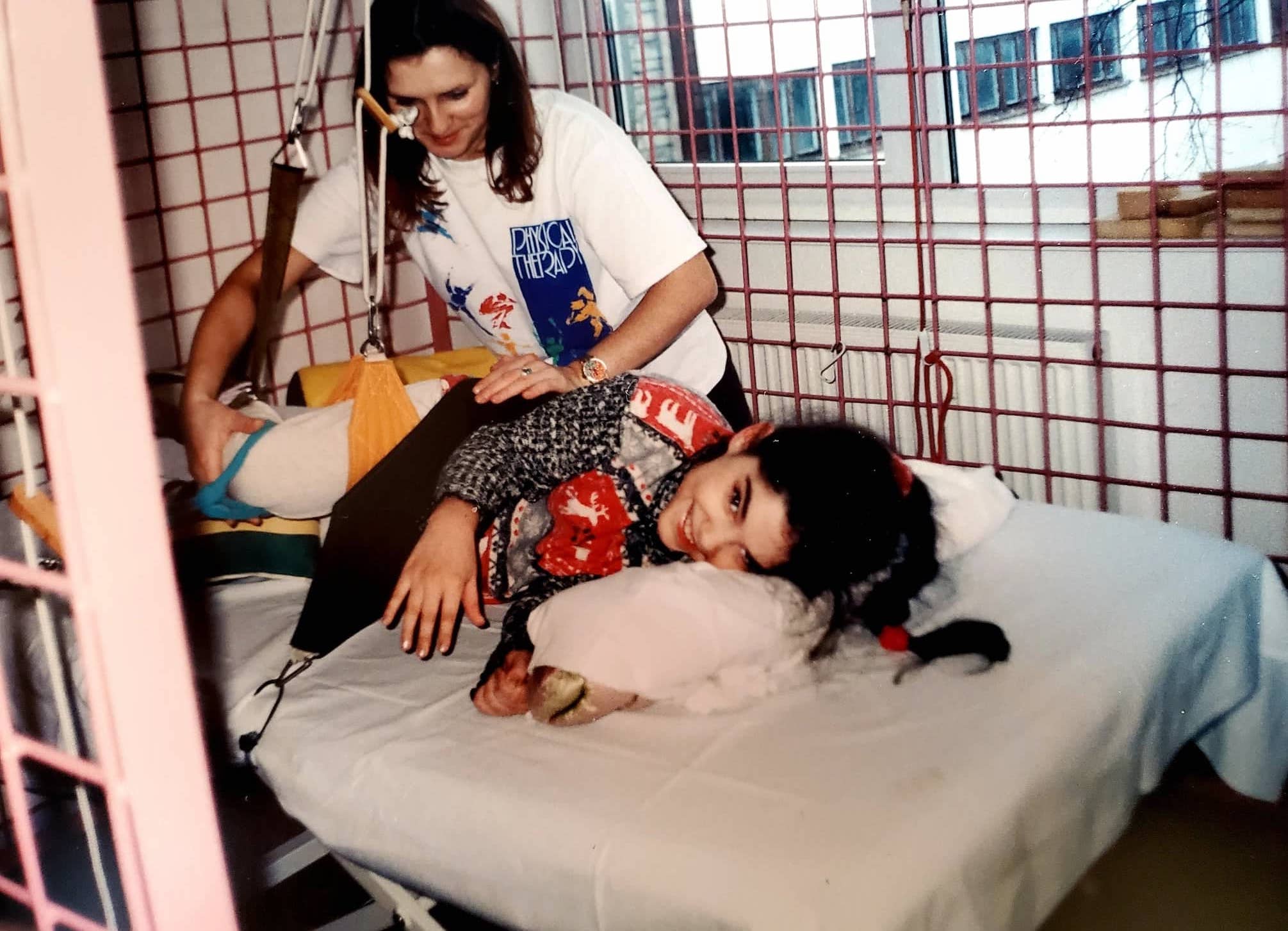
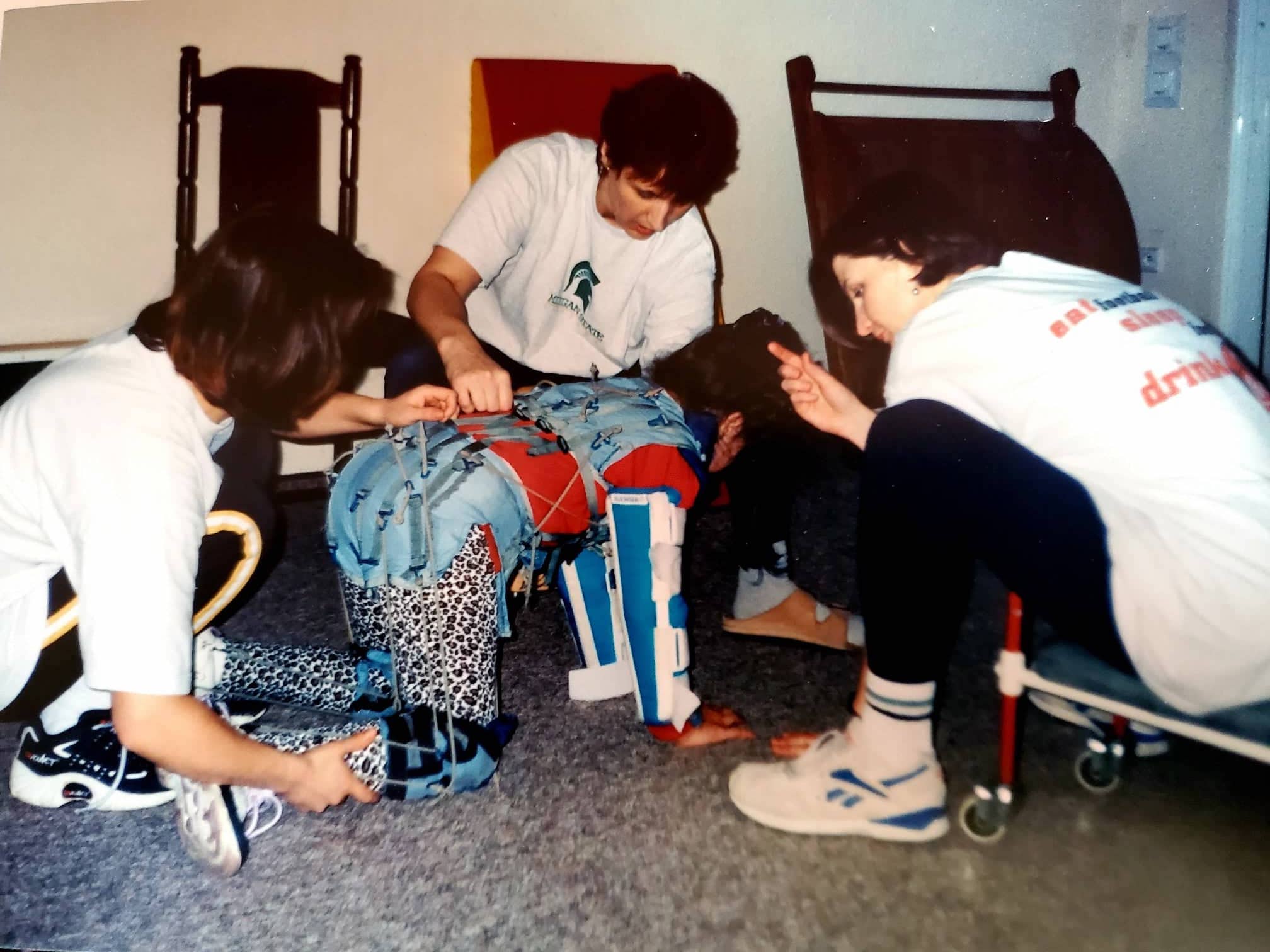
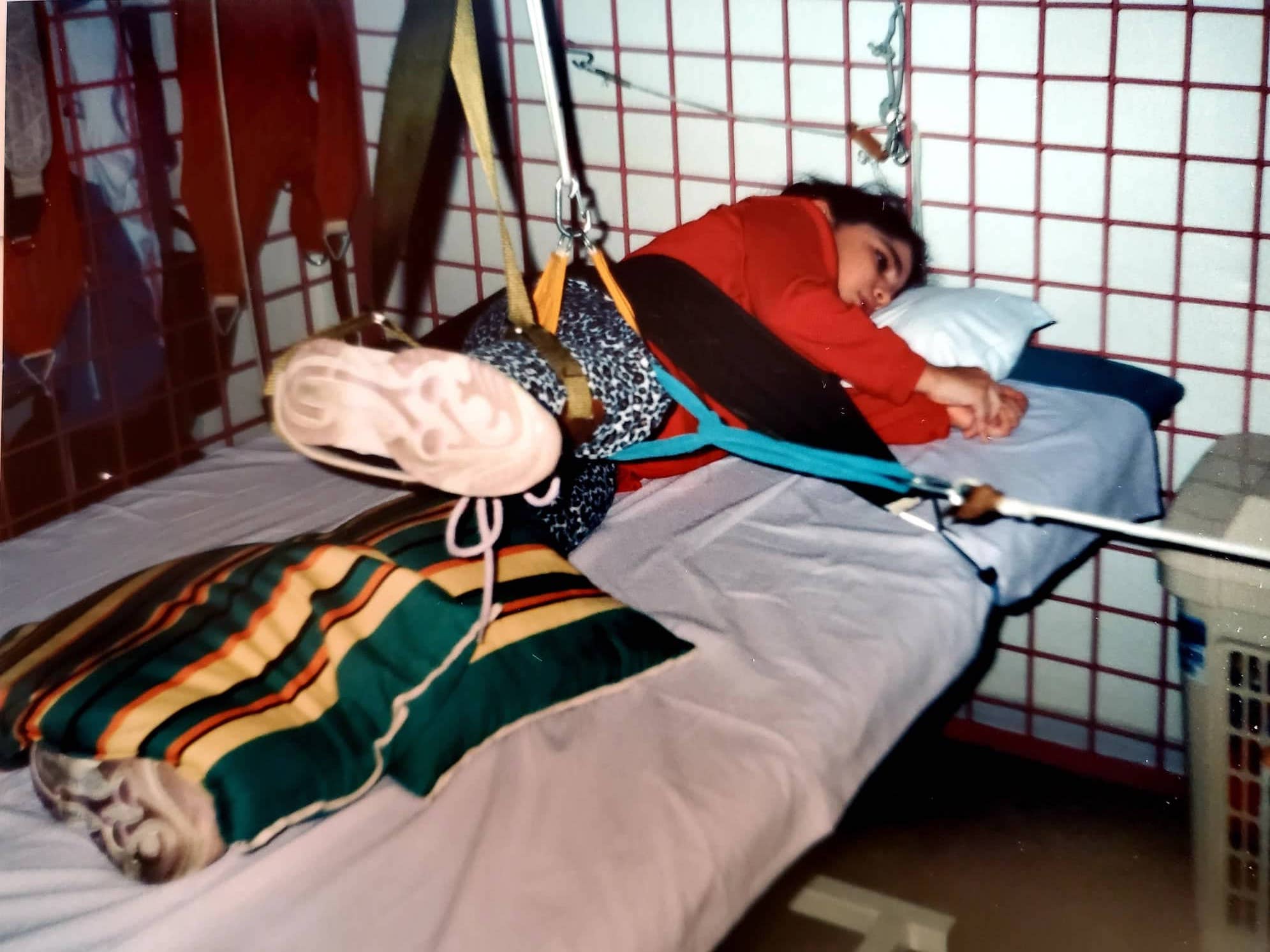
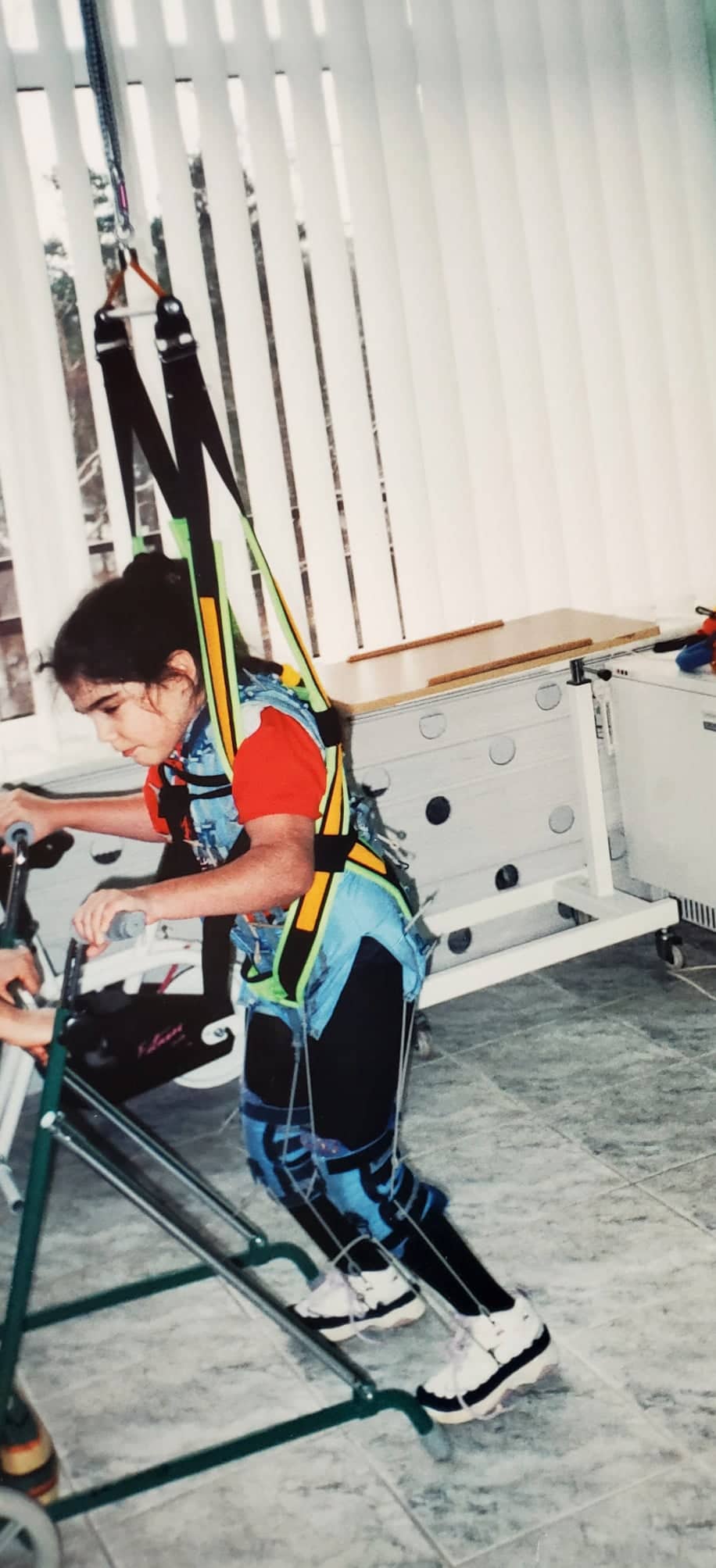
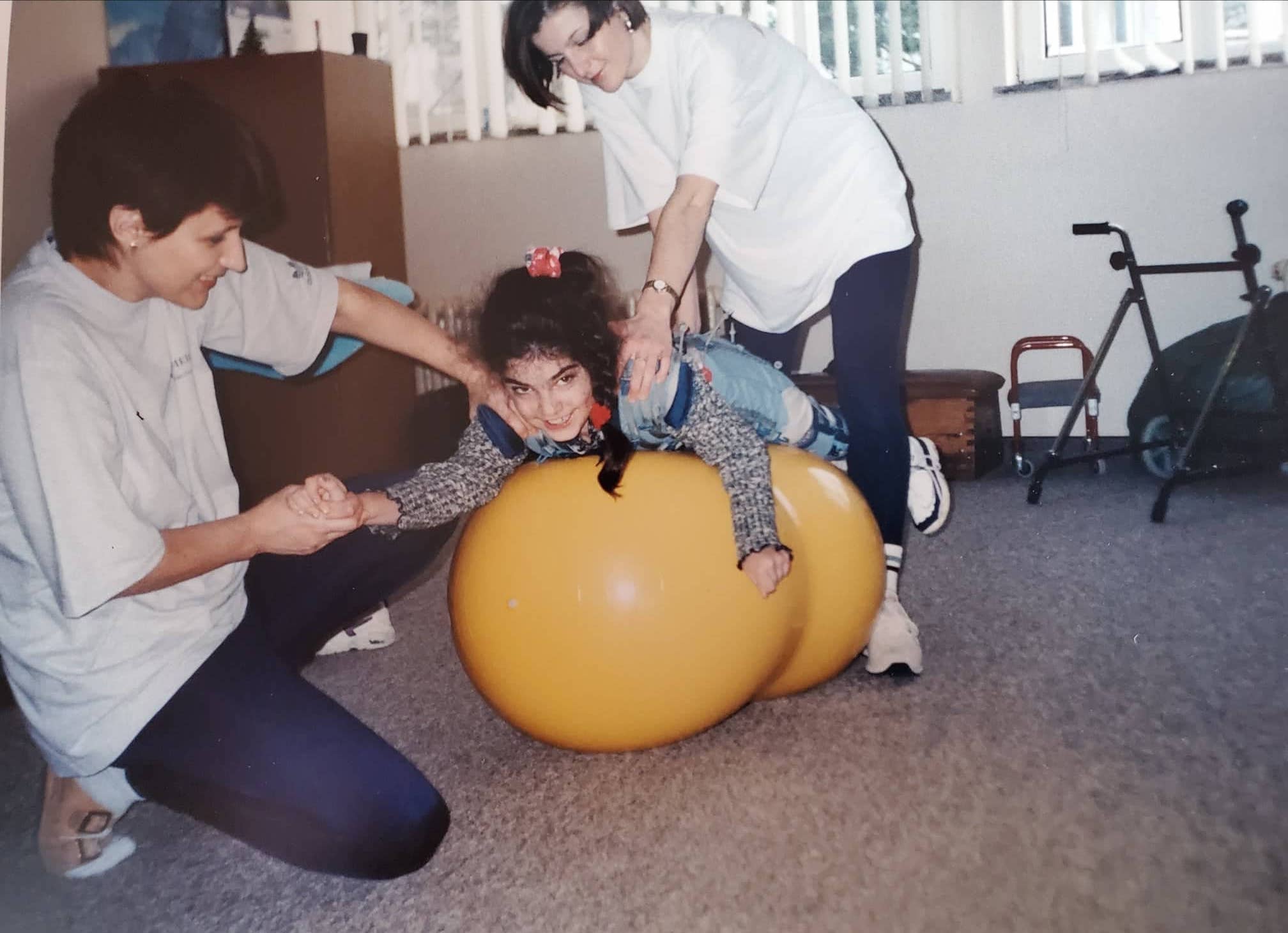
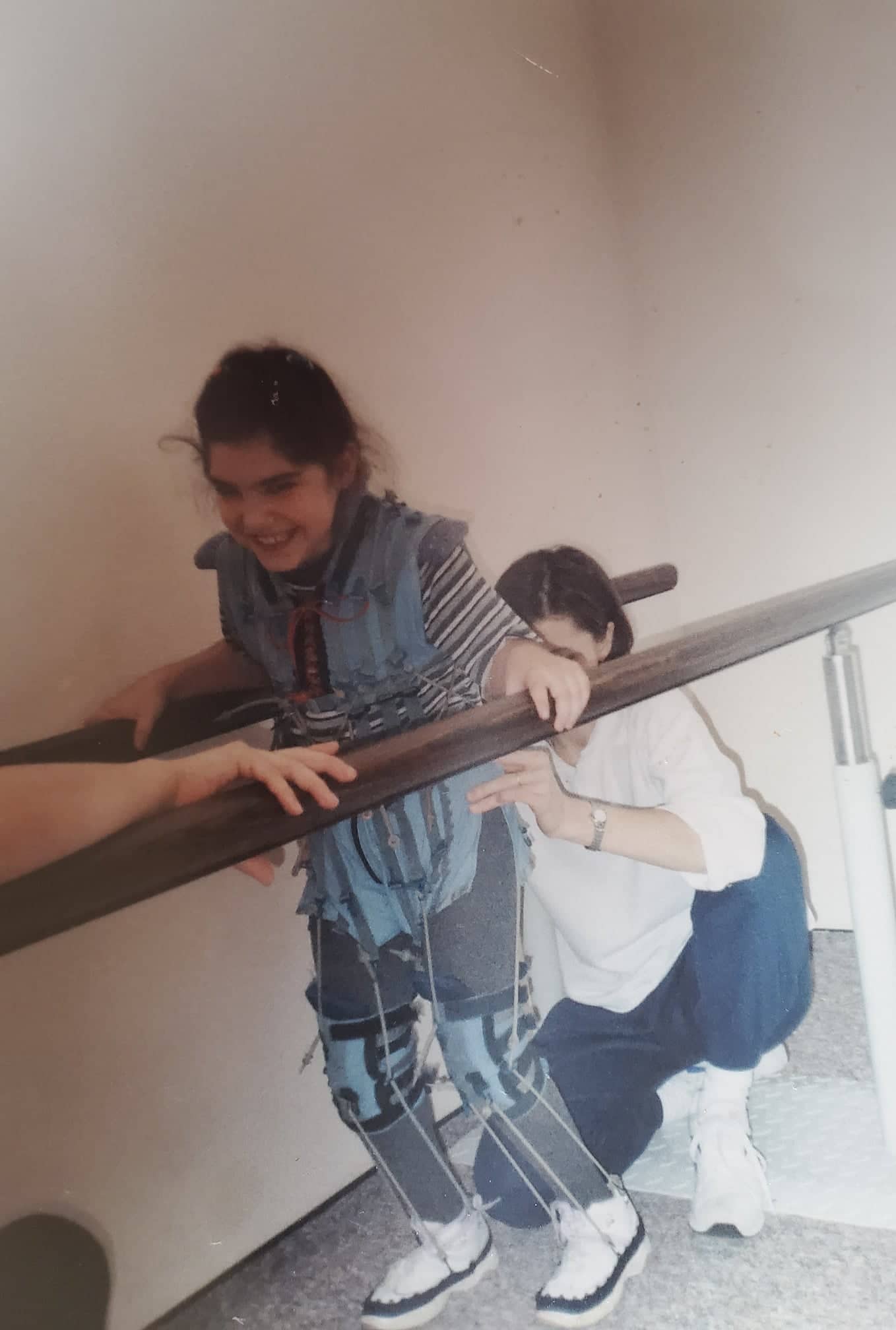
Personal photograph collection. Taken circa 1998/1999, images document my experience at the Euromed Rehabilitation Centre in Poland.2Some photographs feature my wearing the ADELI Suit(in more recent iterations known as the EuroSuit, an improved version of its predecessor).3
“A relation of cruel optimism,” Berlant (2011) writes, “exists when something you desire is actually an obstacle to your flourishing” (p. 1). It rests on a preoccupation with an often correlated socially desired outcome. This relation is not fundamentally cruel, but can potentially become so when the desired objective is informed by an unrealistic and unattainable guiding force.
According to Ahmed (2010), if happiness is a prescriptive directive that orients us toward the right ways of being, then it moves us towards or aligns us with objects, persons, ideas, and worlds that we gather around us as a happiness building project. Happiness is not something we simply disire, but “what you get in return for desiring well” (p. 37). It is in this way that happiness can be thought of not as a state of being, but “what it does” (p. 15): how it moves us by what it promises.
The promise of happiness has brought me in close proximity to multiple worlds, each valuing ablebodiedness as the ultimate happiness building project, expecially for a child diagnosed with Cerebral Palsy of the spastic quadriplegia4variety. Happiness as a project of will (Ahmed, 2014): willing the right way, being willing to subject oneself to certain unpleasantries for the promise of future happiness, positions physiotherapy or the greater enterprise of orthopaedics as an alignment of will. Deriving from two words: orthos “correct or straight” and paidion “child,” combined, orthopaedics involves the process of straightening the child (Ahmed, 2014, p. 72). (The concept of using the rod to straigten the child would haunt me well into adulthood, and bring with it new and complex meaning). A good child, a willing child is a malleable child. Following this injunction, a disabled child with willful limbs must be willing to be physically manipulated into acceptable forms of being. By extension, a disabled child is a happy child when they are agreeable to physical intrusion and manipulation because they are in pursuit of transforming their willful, rigid bodies into willing and able bodies. Ableness as an achivement of will, an outcome of desiring well.
In a world built and sustained on monopolizing ablebodiedness, you desire what you encounter. By continually encountering the world as easier to navigate and primarily accessible to ablebodied walkers, happiness correlates with ease of access in its myriad of forms (access to love, belonging, the privilege of valued personhood, etc.). Even as a child, I was acutely aware of ablebodiedness as a vital precondition to the claim of femininity and the essence of attractiveness.
With the effects of my disability manifesting in asymmetrical and increased muscle tone and tension, achieving a necessary degree flexion or extension results in (en)countering resistence. This resistance can be painful. Getting all limbs and muscles to activate and maintain the dynamics of movement requires the application of force. Such force is both physical (applied to the body) and reactive (felt through the body). It is effective (corporeal: of the body) and affective (incorporeal: not itself of the body) (Massumi, 2002). The quest for ableism is a force to be reckoned with. The force at once real, material, quantifiable, and spectral. The spectre of ableism lingers in the (phantom) promises of happiness it solisits (maximum independence = happiness). It is in this manner that the optimism of ableism as the guiding force acquires its cruel currency.
Being the daughter of Polish parents, I was granted access to claim dual-citizenship: Canadian and Polish. The capacity to cross borders expanded physio(therapeutic) options. Thus, the quest for (proximity to) ablebodiedness became a transnational pursuit. My parents underscored the contrast between the philosophy informing physiotherapy practices employed on young children in Poland and those employed on children in Canada and the US: The former praised for using preemptive methods in treating disability, the latter described as employing reactionary methods mitigating the effects of disability. This is a matter of perception, of course, and not a matter of objective assessment that would withstand any measure of scientific scrutiny. Such comparisons are banal and uninformed – they overlook the complex forces developing bodies are subjected to in an attempt to cure and denounce disability. Both methods sustain the unattainable guiding principle of self-mastery equating to happiness. Such precarious correlations continue to reify systems of oppression exercised on the body reinforcing feelings and forms of abjection (Taylor, 2018) directed toward oneself.
A smile as performative consent.
I have retained vivid memories of my fear of being institutionalized as a child because of my disability. Intermittently, from age 2.5 onward, I was enrolled in various medical and therapeutic sessions, programs, institutions, and interventions meant to intervene (come between me and the progression of disability) as a preemptive and proactive approach. Age 9 marks the last of these institutionalized forms of in-patient interventions of my childhood.
Investing financial and emotional energy in the future promise of my happiness by maximizing my independence, strength, and endurance, my parents enrolled me in a 4-week physiotherapeutic session in a seaside town in Poland (See introductory photo collage and footnotes for further information). Looking at these photographs now, I am struck by the number of photographs which feature my smiling. This time is vividly punctuated by feelings of exhaustion and pain, interspersed with the hope and optimism of being in proximity to happiness (I may not leave here transformed into an independent walker sans mobility devices, but I will come close). These are the phantom limns that highlight, contain and unify the photographic series above. Retrospectively reframing this experience, I am smiling because I have been promised happiness, I am willing in the right way. I am an obedient, disabled child doing what is expected, what I am obligated to do (this pursuit has been financed, it is expensive. I will not waste it). Here, a smile is a performative form of consent or consent by proxy: the proxy is not a person, but a promise. I am not consenting to the pain, exhaustion or discomfort, but the happiness they may bring if I am willing to do everything that is expected. My mom would often caution the physiotherapy team: She may (silently) cry but she is a brave child, a willing child – she is always willing to try. I may have cried, but I smiled more often. A smiling child is a willing child.
In the end, my 9-year old understanding of my body and definitions of success informed by ableist tendencies, deemed the 4-week physically daunting happiness building endeavour as a failure: I returned with mobility devices in tow. I may have been more independent, had stronger core stability, improved dynamic movement and balance, but these gains were eclipsed by preconditions of success correlated with independent walking. Thus ensued a lengthy lapse in any physiotherapy or consideration of the well-bing of the physical body. This was a form of defiance and dissociation. I was a willing child, never whining; I was a compliant child, rarely complaining. My expectations never came to fruition: I failed. It wasn’t until age 23 that I entered a local out-patient physiotherapy setting. This time, my physiotherapist being more intuitive, would caution his students or colleagues tasked with working with me: You really have to watch her. She won’t tell you, she smiles, but her smile masks pain.
My body: What will can’t accomplish, the rod must
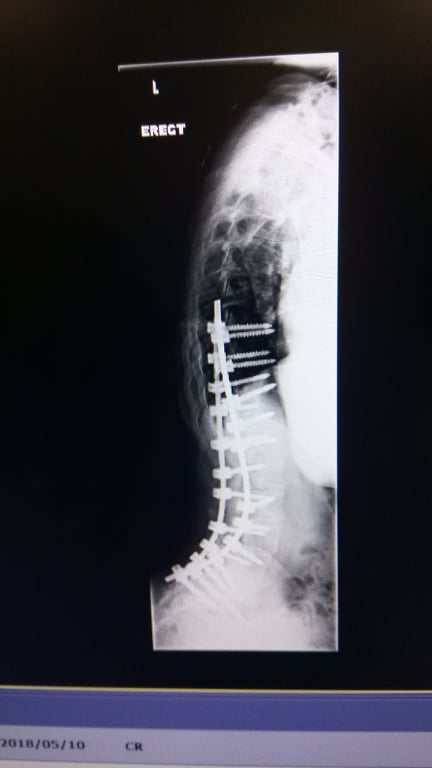
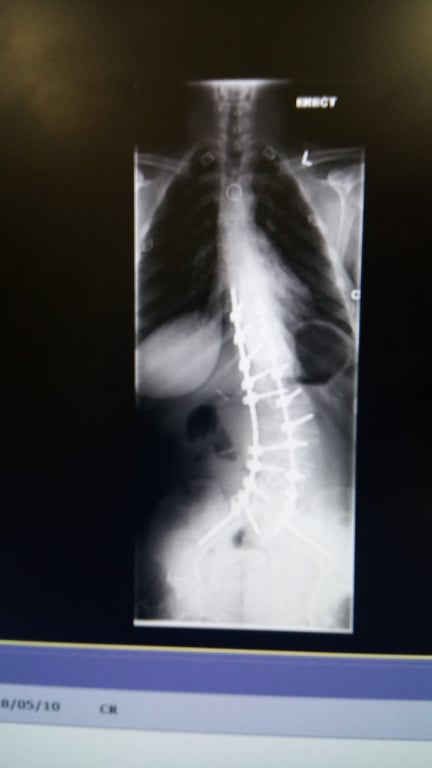
Patient has undergone an extensive spine surgery with the imposition of titanium instrumentation with screws from T9-S2 across the pelvis, multiple-level facetectomies and bilateral laminectomies [as well as] diskectomies In addition, patient has undergone interbody fusion with bone grafting for correction of a severe spinal deformity.
Patient surgical report (March 2018)
My increasing resentment toward my body led to apathy toward any further physiotherapeutic intervention. I was disappointed, disinterested, and disillusioned. I didn’t want to contribute any further focus to my (disabled) body – the cause and site of my oppression. My deliberate disinvestment became a compensatory method: what the body couldn’t accomplish, the mind would compensate for. All time and energy was devoted to academic and educational accomplishment. Without critical self and social reflection, I was reproducing the systems that subjugate the body in favour of the mind. This is an affective example of superficial disembodiment. It is the relationship that we foster with ourselves as bodies that sustains the capacity for violence imposed on bodies (Taylor, 2018).
Beginning in early adolescence, I (along with my parents) began to notice my propensity to lean to one side. Just as everyone grows accustomed to inhabitng their bodies in certain ways and positioning at certain angles relative to comfort and ease of performing certain tasks, I became accustomed to my dominant side. The effects of gravity and weakened bone, coupled with asymmetrical muscle tone, became the perfect alchemy for the slow but steady progression of a spinal curve. This was something I ignored until it was impossible to – it was undoubtedly painful, but even worse to me – it became visible. It further impeded balance, walking, and overall function, but it was its visibility that was the most shameful to me: yet another manifestation of disability – a visible deformity. It was at the point of pronounced visibility that my parents and I began the reciprocal assigning of culpability of who was more at fault for the stark curvature of a once straight spine. They blamed me: I didn’t sit straight, even after being repeatedly cautioned and reminded. I refused physiotherapy – I did this to myself. I blamed them: I was young. It was their responsibility to monitor progression. They blamed themselves: we spared the rod that spoiled the child. We should have been insistent in our resolve in the pursuit of orthopedic intervention (See Ahmed, 2014 for further discussions of the concept and cultural significance of using the rod to straighten a disobedient child’s will). What the spared rod didn’t accomplish in childhood, will now have to reside within the adult.
At age 29, the decision to expose myself to a medically imposed trauma was largely guided by socio-cultural expectations of the body that are founded on ableist tendencies – this I admit with a sense of trepidation. As someone who is dedicated to deconstructing forces of ableism (i.e., the belief that disabled bodies are in need of fixing or straightening to lead a happy and fulfilling life), I was surprised by the scripts I would employ in my effort to convince surgeons of my candidacy for such an intrusive procedure. Sensing their hesitation, I became strategic in framing my primary reasoning for risking some very undesirable outcomes. For instance, I would always focus on the functional gains this procedure would likely render possible. Truthfully, my willingness was guided just as equally by function as it was by form (bodily aesthetics). Although, procedures of anthropotechnology5 increasingly render the distinction between form and function difficult to sustain.
Images captured from a monitor. Pictured scans reflect an interbody spinal fusion T9-S2. Erect side and frontal view.
Recognizing the individual body as a socially intelligible object, it is from a learned sense of abjectness and shame that I arrived at an affirmative decision despite being reminded of the risks and consequences associated with the correction of such a deformity. Confident in my ability to withstand the medical violence I was eager to subject my body to, I didn’t dedicate much thought to the initial physical and emotional effects of spinal reconstruction. The introduction of titanium to the organic substance of the body sent it into shock – an internal rage that manifested itself in extreme muscle tone and tension. As a reaction to the enormous stress imposed on the spine, the body clenched and locked into place only leaving the neck and head under my full, independent control. This resulted in an alienation I did not bargain for. I found myself mourning the body I once was – the same one I felt chronic shame and disgust towards, coupled with chronic discomfort and pain. Nevertheless, it had been a chronic source of pain and discomfort I had learned to live with, even grown accustomed to. I knew how to accommodate and compensate for how I previously moved. The reconstruction, however, presented me with the necessity to find a new centre of gravity – both quite literally and figuratively speaking.
The feelings of alienation from myself were further deepened by what Coffey (2018) terms ‘body work.’ Focused on “altering the subjective experience of the body” (p. 55), constant body work was punctuated by body talk. Recalling previous benchmarks by which to measure surgically mediated improvement signaled “a conscious investment in the appearance in function of the body” (p. 55). The objective was to turn a volatile, rigid body to a willing and functional body, now improved by surgically imposed instrumentation. This is a key demonstration of the ways in which frameworks of mastery, power and dominance over the human body continue to operate. Whereas, historically they were meant to subjugate the physical body under the control of a master (consider practices of colonialism), modern thought has rebranded this framework under the guise of liberalism, self control, or sheer will power and strength of character in overcoming the body’s limits.
The process of becoming acclimated to the titanium residing among muscle, nerve, and bone, etc. demanded unlearning old movement patterns. With time, effort, and a recovering spirit, I moved my way back to joy and away from alienation. I find joy in my ability to take a walk outside around the neighbourhood – this was never possible in my adulthood as the outdoors was an uncontrolled environment that was too expansive to attempt with my deformed spine. Whereas walking was previously confined to indoor spaces, I am now able to claim the privilege of the symbolic value of scuffed and wet shoes – it signals a recontouring of my biographical landscape. Accepting the foreign objects that are now part of my being also required an active reconceptualization of the self: I am now equally body, memory, soul, spirit, muscle, flesh, bone, and all the stuff of life – I am titanium.
Reframing physiotherapy as radical self love
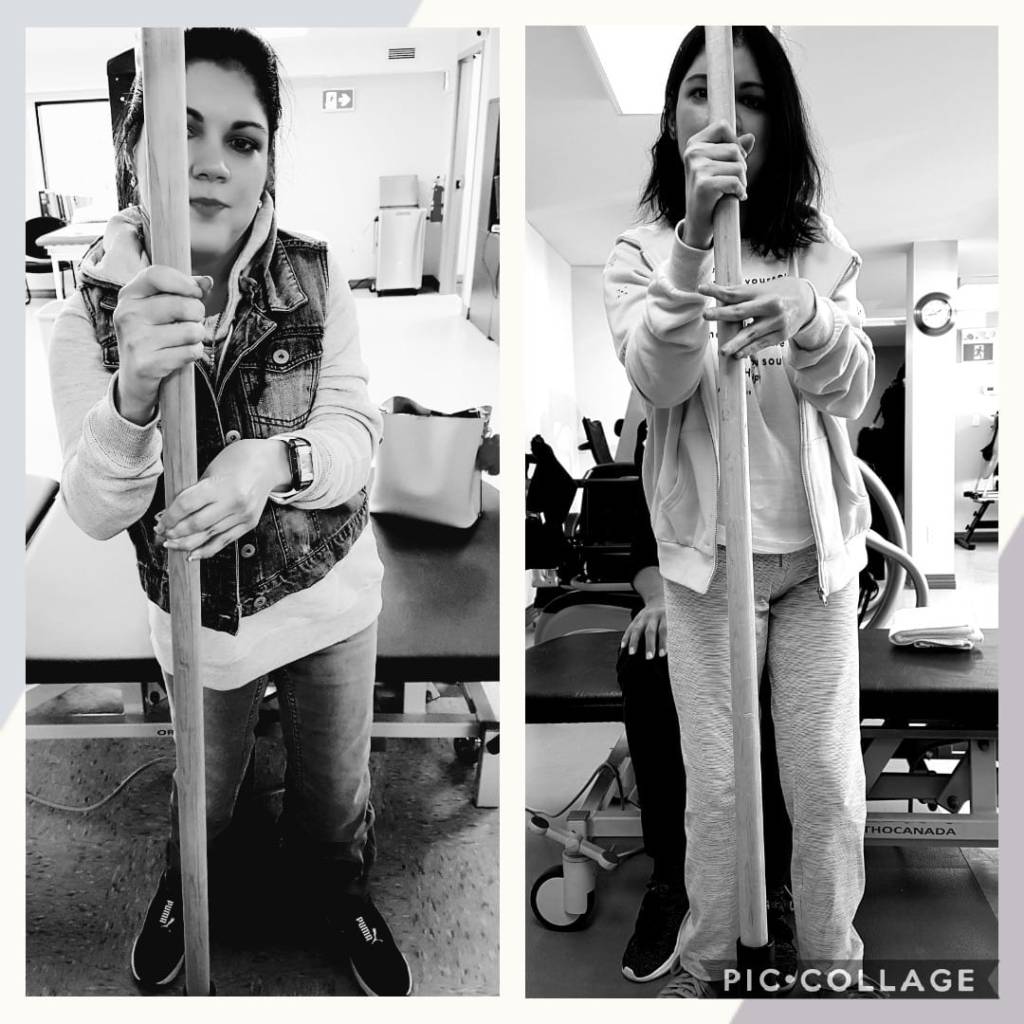
From left to right: Pre-spinal fusion, February 2018; Post-spinal fusion, March 2019. Both images captured by a physiotherapist.
In The Body is Not an Apology, Taylor (2018) frames self-love as central to the advancement of social justice. If systems of oppression thrive on our inability to value “corporeal diversity,” (Ahmed, 2014, p. 51), we must understand social justice “as a call to open up a world that has assumed a certain kind of body as the norm” (Ahmed, 2014, p. 51). Taylor’s (2018) concept of radical self-love is fundamentally different from self-acceptance. Whereas self-acceptance implies what Ahmed (2014) calls “smoothing a relation” (p. 51) or learning to navigate a system based on oppression, radical self love demands the elimination of oppressive forces and hierarchies founded on bodily or social markers of difference.
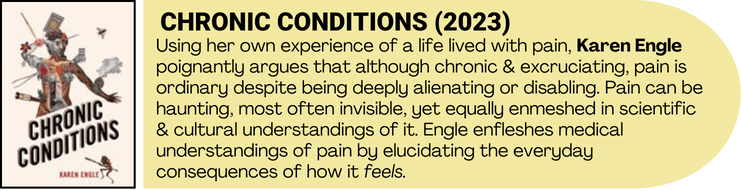
If childhood is marked by the learning and internalizing of systems of norms that inform our relation to the world (i.e., ablebodiedness as achieving happiness), my adulthood has been marked by the unlearning or the consciousness unraveling of the cruel optimism informed by toxic, “precarious, and perverted” promises of happiness (Ahmed, 2010, p. 44). My approach is now rooted in practical, pragmatic objectives guided by critical perspectives of the forces of ableism. Physiotherapy was once a happiness exploit focused on the cure or overcoming of disability. To will the body in the right way, I was expected to share in the conditioned abjectness toward my being. I now share in a collective refusal to reaffirm a bodily hierarchy that contributes to the oppression of people with disabilities. I have since actively reclaimed the ways in which I use, value, and care for my body. No longer focused on curing but on caring, my entry into a physiotherapy clinic has become a portal. A portal through which I enter regularly. A scheduled and welcomed liminality between chronic disability and pain punctuated by temporal relief, even if fleeting. A portal within which space collides with time. In her memoir, Engle (2023) curates an archive of medical, social, cultural understandings of chronic conditions to limn a life lived in pain. She narrates her experience of entering this kind of portal. Her description so vividly reflects my re-articulation of the affective experience of physiotherapy:
The passage between the building’s main entrance to her office door was a portal to another dimension. I lay on the table and knew her interest lay not in fixing me but in providing temporary succour. Time melted in that room.
p. 85. (Emphasis added)
Engle poignantly argues that although chronic and often excruciating, pain is ordinary, although deeply affecting, alienating, or disabling. Valuing bodily diversity contributes to a movement, a new world building project made possible by expanding our biographical narratives, landscapes, and understandings of disability beyond interests in cures. Often impossible, notions of curing lead to self-abject, or peddle unrealistic expectations of transcending disability or wrongly framing pain and disability as opportunities for personal growth. Disability is a natural aspect of life. If you’re not disabled in the present, you will experience disability in the future. We all share in the necessity to grow and build a world where our collective understandings of disability begin with acceptance of our vulnerability.
Until next time.
With vulnerability & shared refusal,
Ev XO
Footnotes.
1 In The Promise of Happiness (2010), Sara Ahmed charts a happiness archive in which happiness functions as a social imperative. Happiness is linked with certain life choices and the avoidence of others. To align yourself with social norms and acceptable desires will lead to happiness. To be happy means to be properly aligned with gender, somatic, heteronormative, etc. expectations. Happiness, thus becomes a project of will. Veering away from norms promising happiness results in killing joy.
2 To learn more about the in-patient, multi-therapy methods used at the Euromed Rebilitation Centre for children living with neurological phyisical disabilities,please visit their website: https://euromed.pl/en/pioneering-methods-of-rehabilitation/
4 Cerebral Palsy spastic quadriplegia is characterised by increased muscle tone (spasticity) in all four limbs, and the trunk. Such spasticity results in rapid muscle contraction and release, limited range of motion, and joint stiffness. Combined, these contribute to poor balance and coordination, difficulty walking, and other varied musculoskeletal effects. For example, prolonged increased muscle tone (muscles continuously pulling on bones and joints) can result in the development of bodily deformities.
5 The process of introducing technology to the natural or organic environment. The methodology of intervention meant to improve various forms of life.
References.
Ahmed, S. (2014). Willful subjects. Duke University Press.
Ahmed, S. (2010). The promise of happiness. Duke University Press.
Berlant, L. (2011). Cruel optimism. Duke University Press.
Coffey, J. (2018). Body work: Youth, gender and health. (Youth, Young Adulthood and Society Series). Routledge.
Engle, K. (2023). Chronic conditions. McGill-Queen’s University Press.
Massumi, B. (2002). Parables for the virtual: Movement, affect, sensation. Duke University Press
Taylor, S. R. (2018). The body is not an apology: The power of radical self-love. Barrett-Koehler Publishers, Inc.
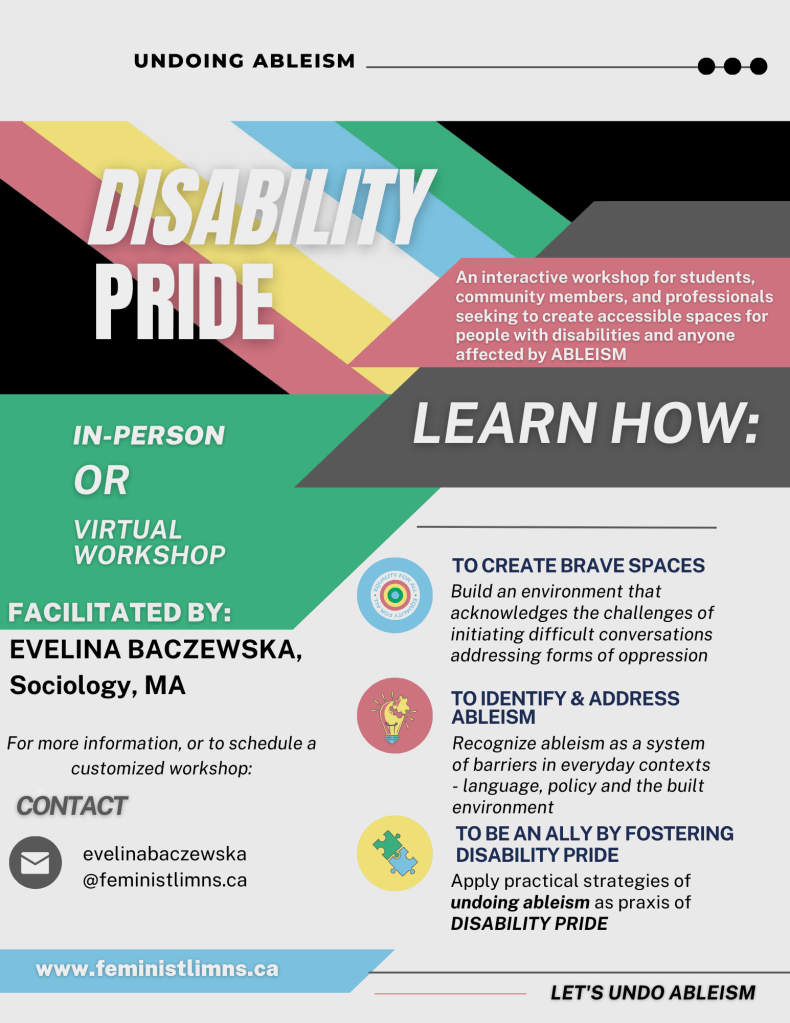
Let’s Undo Ableism! Offering an insightful, interactive DISABILITY PRIDE workshop for students, community members, and professionals seeking to create accessible spaces for people with disabilities, and anyone affected by ABLEISM. LEARN HOW: • TO CREATE BRAVE SPACES Build an environment that acknowledges the challenges of initiating difficult conversations of addressing forms of oppression. • TO IDENTIFY & ADDRESS THE LIVED CONSEQUENCES OF ABLEISM Recognize ableism as a system of barriers in everyday contexts – language, policy, the built environment, etc. • TO BE AN ALLY BY FOSTERING DISABILITY PRIDE Apply practical strategies of undoing ableism as praxis of DISABILITY PRIDE.
In-person or virtual workshop options are available. For more information or to schedule a customized workshop, contact me: • Email me: evelinabaczewska@feministlimns.ca
Extending a limn as an act of (re)connection, (re)engagement & (re)introduction
The above video features a music track titled, Phantom Limb Pt. 2 from the 2002 motion picture, Luckiest Girl Alive. Music composed by Linda Perry, screenplay by Jessica Knoll, directed by Mike Barker. The music track plays as a previous black and white version of the logo is displayed with accompanying text explaining that the blog is being re-titled from: Feminist Limns: An Embodied Archive of Intersectional forms of Access to: Feminist Limns: A Disabled Archive of Intersectional Struggles for Access. The new title is accompanied with a coloured version of the original logo reflecting the changes in titling; and promises forthcoming blog posts focused on centering disability as a concept, as well as an emotional and embodied reality that will explore lived affects of ableism. The instrumental track playing concurrently with text features a melancholic, yet hopeful tune meant to echo the combined and equal pull of joy and struggle of navigating an able-bodied world with a disabled body.
Following an extended absence (I have not published a blog post since October 2021), I have decided to punctuate my return to the blog-sphere with a re-titling of my blog to: Feminist Limns: A Disabled Archive of Intersectional Struggles of Access. This is a deliberate choice, as the text in the video explains:
FEMINIST LIMNS…
Will remain anchored in feminist thought. The change in title signals a foregrounding of disability as a concept and as an emotional and embodied reality. My goal is to explore the lived and felt affects of disability and ableism. Forthcoming blog posts will explore the emotional labour–struggle, shame, melancholy; as well as joy, pride and awe of being disabled.
Ev Baczewska
While I have never been disingenuous or inauthentic in the limning of my experience as a disabled woman, my voice did not reflect an emotional granularity necessary to truly depict the seemingly often oppositional sensory experience of: struggle and joy, awe and shame, pride and disability; and human and (anti-)heroine. Forthcoming entries will reflect an activism that is messy, truths that are uncomfortable, realities that are jarring, and emotional journeys that intersect and intertwine, and refuse to accept ableist tendencies.
All truly great thoughts are conceived while walking.
Friedrich Nietzsche, Twilight of the Idols
Walking as practical, as perennial, as pretheoretical – arising prior to theoretical scrutiny or consideration. Walking justified in the Nietzschean sense as an ordinary activity that precedes theory, but serves as the motility through which theory is derived. Thus: truly great theory = the capacity to walk. Walking as exposure. Walking as experience. Walking as a philosphical exercise (consider the Socratic Method or the Socratic Walk).
Despite increased urbanization of the contemporary city and new methods of mobility (i.e., the automobile, bike riding, public transportation, etc.), walking remains “part of the mobility reportoire of hypermobile people” (Shortell, 2016, p. 3) engaging in the pedestrian hustle and bustle. Walking as the main signifier of the modern cityscape is a demonstration of self-mastery and active citizenship. In fact: micro-mobility practices (everyday walking), reveal the instrumental and intentional patterns of the everyday citizen as they navigate space for profit and for pleasure. Thus, walking as an everyday practice becomes a banal exercise of human agency – to walk is to take command of space. It is a tactic “used by the relatively powerless aginst the designs of the relatively powerful” (Shortell, 2016, p. 2). Consider pound the pavement politics in the form of street protests or demonstrations.
Walker as ordinary practitioner, modern rebel.
The performance of walking in a culture preoccupied with ambulatory navigation as a demonstration of agency codes walking as one of the ultimate signifiers of what it means to be human. Common literary archetypes of modern navigation go as far as positioning the city walker “as an exemplar of rebellion, freedom, and agency – the pedestrian hero or the flâneur” (Cresswell, 2010, p. 20). De Certeau (2002), in his Walking in the City theoretical-literary piece, further describes walkers as ordinary practitioners. He writes, “the ordinary practitioners of the city live ‘down below,’ below the thresholds at which visibility begins. They walk – an elementary form of this experience of the city; they are walkers” (p. 93).
However, the act of walking being labeled as ordinary, everyday, is problematic and not always accurate. As a disabled person whose everyday navigation of the world requires the use of assistive devices, unassisted walking practices are not ordinary. Walking being codified by walkers as normal, pedestrian, and seamless, results in my being positioned as the “‘implicit ‘other’ who supposedly live[s] outside the ordinary, the everyday […]” (Highmore, 2001, p. 1). Claiming everyday life as self-evident and easily accessible based on the navigation patterns of the pedestrian serves as an implicit erasure of my struggle. The persistence of building ‘back door’ (Dolmage, 2017) accessibility routes over front door universal access, reifies disability as something that must be hidden from view. The wheelchair user is not a prominent figure of the modern cityscape. In fact, it is through back door accessibility that my entrance becomes front door spectacle. My attendence is not expected, but impossible to ignore as it sometimes requires the rearrangement of the space.
Thus, ambulatory negotiation of space – the capacity to walk is in and of itself a privileging act. The inability to independently walk is a structural limitation that becomes spatially evident because a preoccupation with walking leaves little support for other modes of everday mobility. As such, different forms of movement as enacted and exercised by the body become intelligible markers of difference that inform subjectivity and intersect with those of race, class, gender, etc., to produce unique experiences of oppression and privilege.
If we consider the usage of something as a form of communication (Ahmed, 2019), the modern city was discernably built for able-bodied walkers. The prominent presence of stairs, the absence of curb cuts at the end of sidewalks signifies the lack of consideration for assistive mobility device users. The presumed presence of the able-bodied walkers is so banal that “walking is very much hiding in plain sight” (Shortell, 2016, p. 2). What is common recedes from view, unless it prevents ease of passage (Ahmed, 2019, 2017). Walking as a display of modern city life, Cresswell (2010) writes, “is wrapped up in narratives of worthiness, morality, and aesthetics that constantly contrast it with more mechanized forms of movement which are represented as less authentic less worthy, less ethical” (p. 20).
Being confronted with inaccessible city spaces and finding alternative routes from Point A to Point B (often short routes for the able-bodied walkers), become forced detours for wheelchair users dictated by the absence of smooth or level terrain. The absence of level pavement or presence of stairs is not coinsidental, it is a claim of the indended user and whether the terrain was meant to be used at all. In appraising the usefulness of something or for whom use was intended, “what is missing comes to matter” (Ahmed, 2019, p. 88 emphasis in original). It is an absent presence, a spectre, a moral imperative.
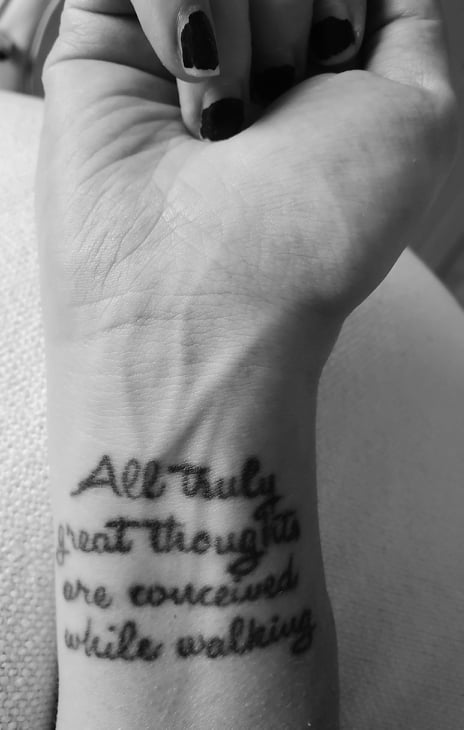
Struggling to find value in the way I move in the world, recurrent metaphors, archetypes, and everyday practices that privilege walking served as willful incentive to inscribe the Nietzschean quote (introducing this entry) on my inner right-hand wrist:
A greyscale photo of a clenched, inner right-hand wrist. Tatooed in black, loose cursive, handwritten-style text is: All truly great thoughts are conceived while walking.
As a sign of protest (not an ordinary walker, but still a rebel), the clenched fist rises again (see Ahmed, 2017, Living a Feminst life). As a refusal to accept walking as ordinary, I wear this quote as a badge of irony that it poses in my life. An attempt to queer the meaning of this quote, it is inscribed on a disabled woman’s wrist. It is a rearticulation of my biographical landscape – my theories of everyday life are borne out of my necessity to queer walking practices as a form of survival.
The aesthetics of motion…
My reflection eternally haunted by the generalized other.
I sit at the opposite end of the uncanny valley – my body and my mind real,
but the aura of the real, the desired is betrayed not by physical appearance,
but by movement, the aesthetics of motion.
Ev Baczewska
Until next time.
With vulnerability & shared refusal,
Ev XO
References
Ahmed, S. (2019). What’s the use: On the uses of use. Duke University Press.
Ahmed, S. (2017). Living a feminist life. Duke University Press.
Cresswell, T. (2010). Towards a politics of mobility. Environment and Planning D: Society andSpace 28:17-31.
De Certeau, M. (2002). Walking in the city in The Practice of Everyday Life. University of California Press. pp. 91-110.
Dolmage, J. T. (2017). Academic ableism: Disability and higher education. University of Michigan Press.
Highmore, B. (2001). Questioning everyday life in The Everyday Life Reader. Routledge. pp. 1-34.
Shortell, T. (2016). Introduction: Walking as urban practice and research method in Walking in Cities: Quotidian Mobility as Urban Theory, Method, and Practice. Temple University Press. pp. 1-16.

 Feminist Limns