Disability pride and grief oscillate according to the rhythms of access, punctuated by the certainty and predicability of ableism.
– Ev Baczewska
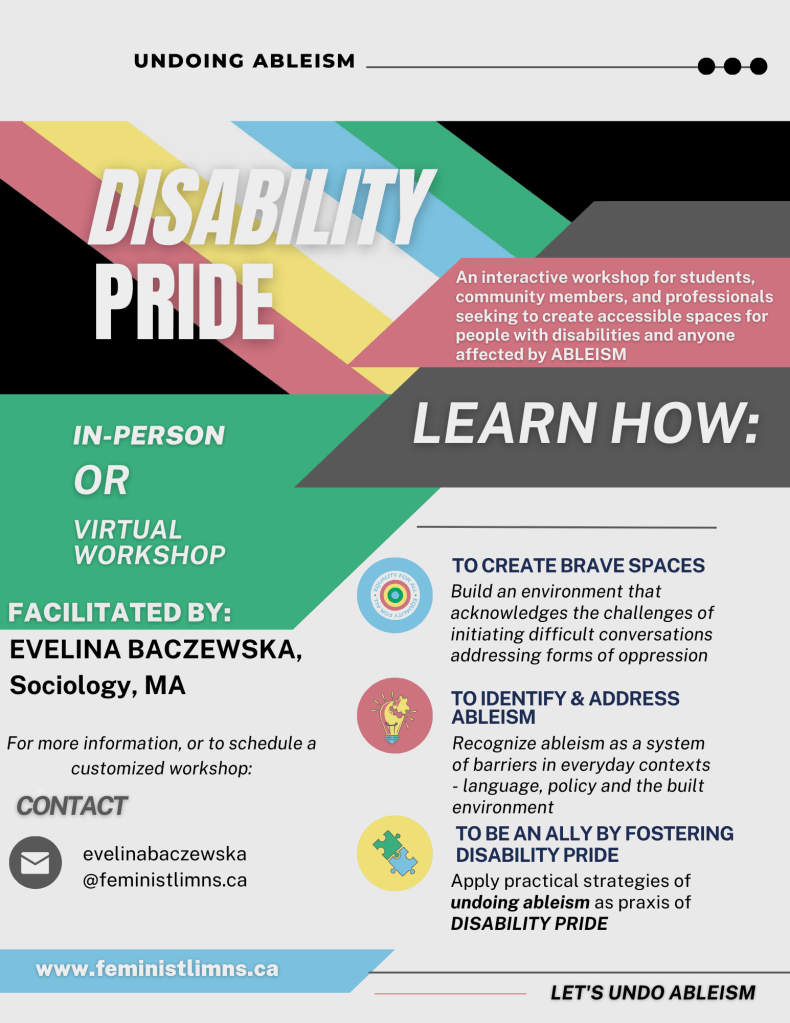
July marks Disability Pride month. In truth, I consider myself a relatively new member of the Disability Pride movement. My activism thoroughly foregrounded in unifying pride with disability, though it took me well into my late 20s to actively claim a disabled identity that is not founded in abject shame. Disability Pride being synonymous with Disability Justice, I deliberately employ pride in calls for disability justice. Meant to convey a sense, a feeling of the enfleshed–lived and felt affects of disability and ableism, calls for Disability Pride elucidate the paradox of living with a disability: I sense myself at once enmeshed in chronic feelings of guilt, shame, exclusion, and pain with intermittent joy, comfort, and pride while in (or out of) community with others. Not until I welcomed a sense of pride among my experience of disability was I able to openly acknowledge the haunting reverberations of grief that often consume my everyday negotiation of a world not intended or built for me in mind. To be disabled is consistently clash with a sense of loss. I have felt immeasurable loss. Loss of: love, belonging, connection, intimacy, spontaneity, opportunity; entry into bars, parties, dance floors, buildings, offices, homes, boardrooms, bedrooms, bathrooms, medical exam tables, etc. My own journey still fraught with ableist tendencies (YES–disabled people need to confront their own ableist biases). I have a lot of grief and shame left to unpack, but disability pride offers me avenues for disabled joy. Most importantly, it arms me with the tools to undue ableism.
Cultivating disability pride.
My advocacy leads with the following conditions for cultivating genuine disability pride:
- Disability Pride demands that we name the lived and felt affects of ableism
- Recognize that ableism is inextricably linked to all systems of oppression and violence towards those that are unable to reproduce norms that align with a dominant culture, race, sexuality, gender identity, language, religion, appearance, age, health/wellness, general ways of being, learning, and navigating, etc.
- Identify as disabled. This is necessary to pressure social orders to produce an environment in which disabled people thrive. Identifying as disabled creates community, gives access to disability things, and resources
- Foreground the lived experience of people with disabilities that are ignored by official policy – i.e., the Accessibility for Ontarians with Disabilities Act
- Recognize that people with disabilities live complex lives with intersecting identities and barriers. We hold multiple identities and markers of difference
- Implementing universal access: Building front door accessibility, not backdoor routes. Considering different ways of being from the onset
- Using less energy to impression manage (making others feel more comfortable in our presence)
- Fostering Disability Pride means undoing ableism. This is collective world building: we all hold the responsibility of creating a world founded on belonging
- Undoing ableism requires narratives of disability that reflect the oppositional sensory experience of: struggle and joy; awe and discomfort; pride and shame of being disabled
- Building disability pride demands activism that is messy, truths that are uncomfortable, realities that are jarring; barriers that intersect and intertwine, and refuse to accept ableist tendencies
Books as companions: Readership as community & companionship.
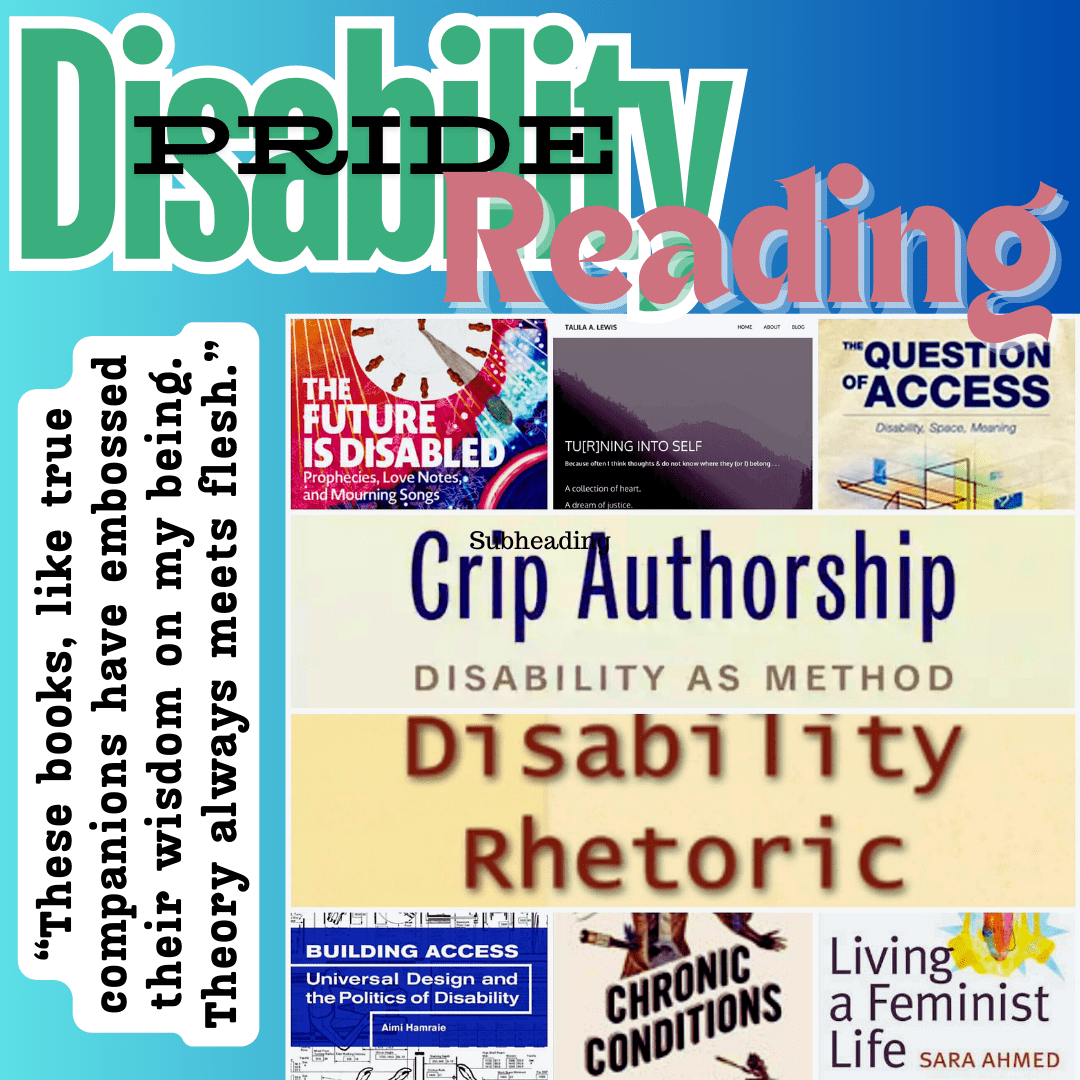
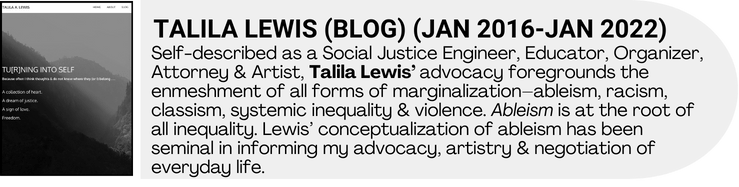
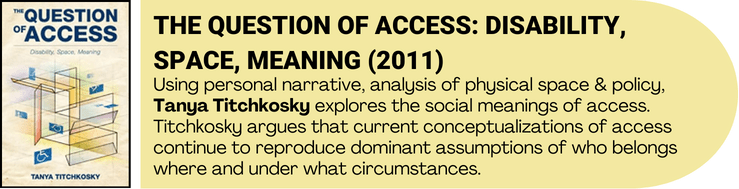
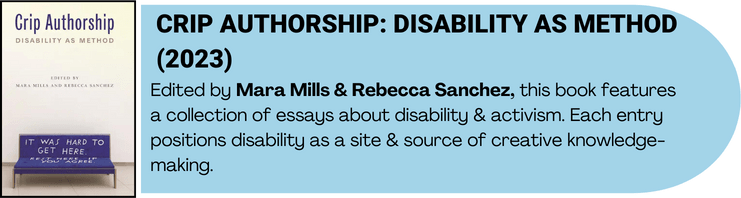
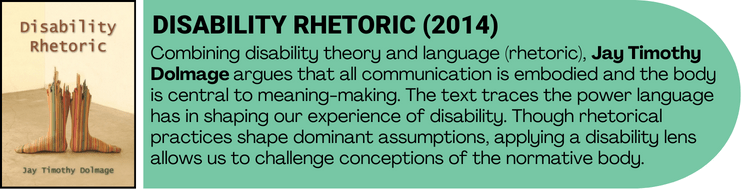
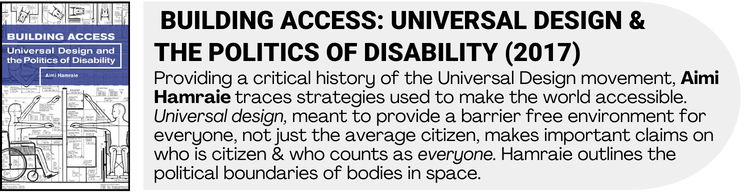
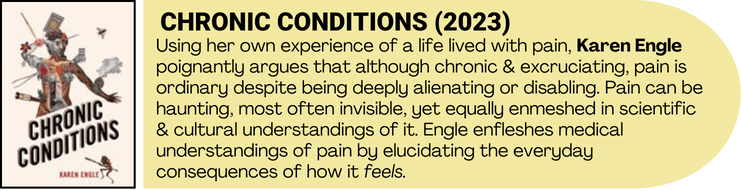
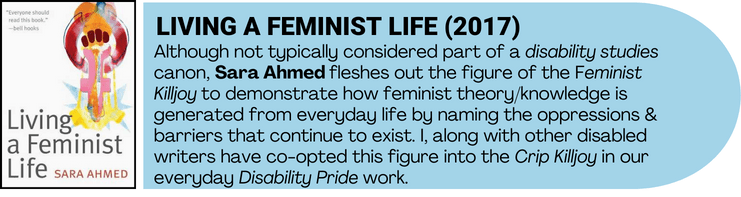
To cultivate disability pride is to find community and companionship. Stories of disability, each unique and nuanced, echo a singular plurality–a connecting and affirming limn highlighting the inextricable intersections of oppression, creative resilience, and pride. It is a call to solidarity. Recognizing that ableism breeds all forms of oppression and inequality has widened my call for justice. Adopting an anti-ableist approach has led me to those seeking to transform everyday institutions by exposing the central interlinkage between ableism, racism, sexism, classism, and all other discriminatory “isms” perpetuating exclusion, hostility, or violence. This community has revealed itself to me in several iterations: institutional diversity consultants, writers; and other disabled activists, authors, and colleagues. Colleagues have become allies. Authors’ theories and narratives have illuminated experiences of disabled or activist grief and joy igniting my own contribution to making life more equitable by making it accessible. Notably, it has brought me in touch with books (and other forms of texts). Sprayed with coffee stains because I was startled out of my train of thought in the midst of reading or pages marked by tears because someone else’s narrative captured an essence of my lived experience, passages have been highlighted, notes have been scribbled, and corners have been earmarked for future citation; these books have lended the ideas and words to contextualize my own thoughts. Like true companions, these books have embossed their wisdom on my being. Theory always meets flesh. They have revealed a lexicon to decode how oppression functions and feels. They have all contributed tools to dismantle systems of ableism and expanded my understandings of disability beyond medical explanations providing the literary, theoretical, rhetorical, and artistic methods to flesh out my own disabled grief and joy. I extend a connective limn to anyone who wishes to join in allyship of disabled pride. Listed below are some of the books that reframed my thinking and feeling of disability. This list is not exhaustive. There are many, many authors and activists from various fields, disciplines, and other forms of credentialed knowledge whom have influenced my own authorship. This is a starting point for those that are new to these ideas and concepts…and hopefully a point of expansion for those living disabled lives.
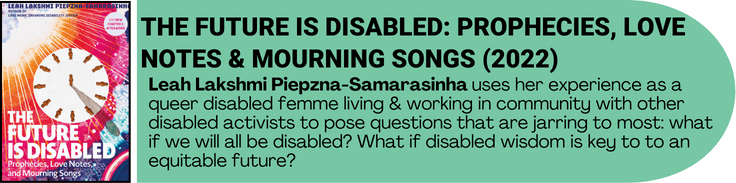
For more information, click on graphics below to be taken to the book’s publisher site.
In solidarity, I warmly invite suggestions for further reading…
With disabled joy,
XO
Ev
 Feminist Limns